Drug and alcohol addiction affects millions of families across India. It damages physical health, mental peace, relationships, and financial stability. Many people want to quit addiction, but they struggle without proper support and medical guidance.
A professional nasha mukti kendra gives patients a safe place to recover. It provides counseling, therapy, medical care, and emotional support. Recovery becomes easier when trained experts guide patients step by step during difficult situations.
According to several health reports, substance abuse cases in India continue to increase every year. Young adults and teenagers are also becoming vulnerable to alcohol and drug addiction. Early recovery treatment can prevent serious health and social problems later.
Families often feel helpless when addiction changes a loved one’s behaviour. Fear, stress, anger, and emotional pain become part of daily life. A trusted rehabilitation centre can help both patients and families rebuild confidence and hope.
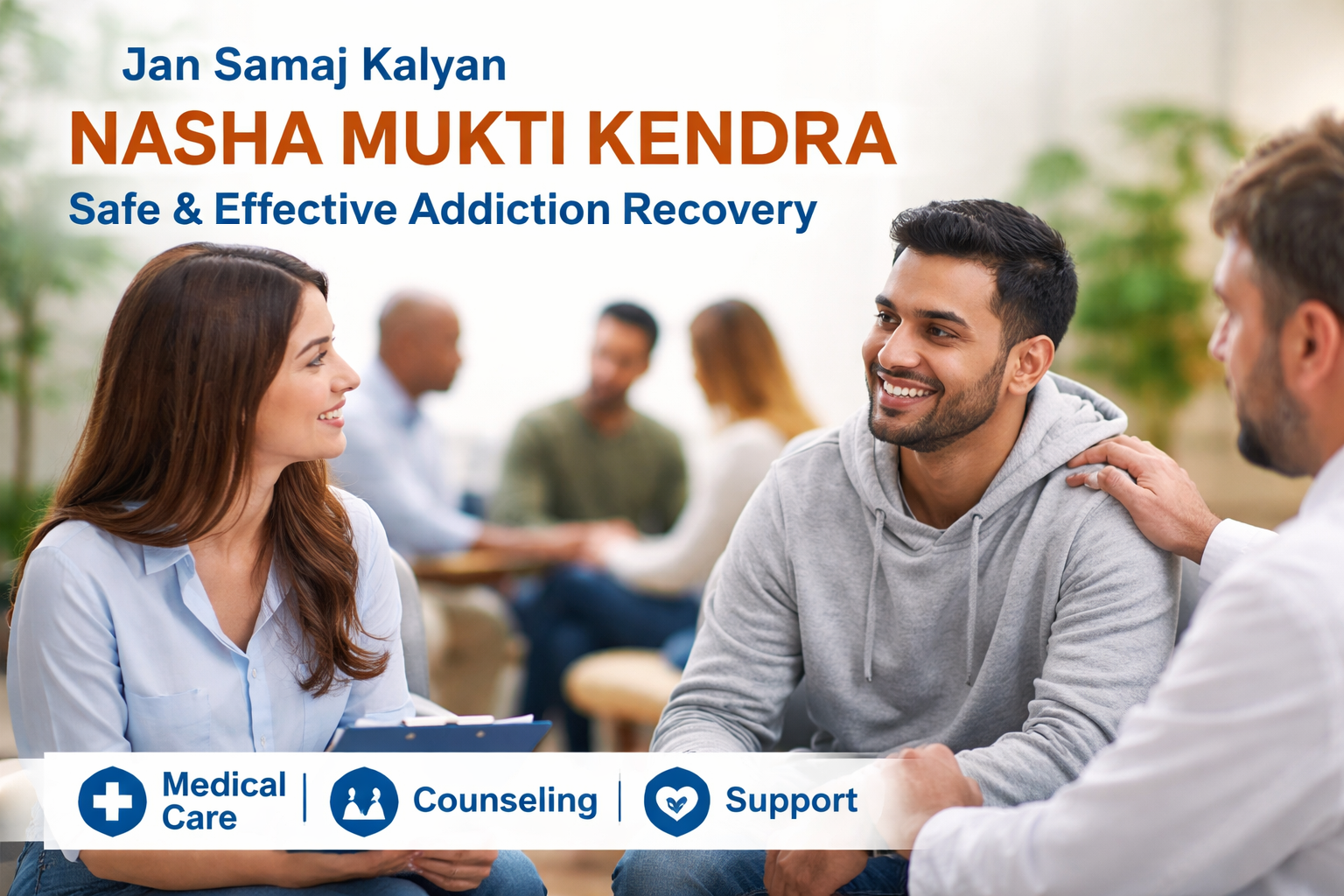
Jan Samaj Kalyan Nasha Mukti Kendra focuses on complete addiction recovery treatment with professional care, counseling, and long-term recovery support. The centre helps patients move toward a healthier and addiction-free future.
What Is a Nasha Mukti Kendra?
A nasha mukti kendra is a rehabilitation centre that helps people recover from alcohol, drugs, smoking, and other harmful addictions. These centers provide medical care, counseling sessions, and emotional support in a structured environment.
Many people think addiction is only a bad habit. In reality, addiction changes brain behaviour and emotional control. Professional recovery treatment helps patients regain physical strength, emotional balance, and confidence in daily life.
Types of Addiction Treated
Most drug rehab center programs treat different forms of substance abuse, including:
- Alcohol addiction
- Drug dependency
- Smoking addiction
- Tobacco addiction
- Prescription medicine misuse
- Chemical substance abuse
Some rehabilitation centres also provide mental health support because addiction often connects with anxiety, depression, stress, and trauma.
Signs Someone Needs Recovery Treatment
Recognizing addiction early can save a person’s life. Many families ignore warning signs in the beginning. Over time, the condition becomes more dangerous and difficult to manage without professional help.
Physical Signs of Addiction
A person struggling with addiction may show visible physical symptoms such as:
- Sudden weight loss
- Weak immune system
- Sleep problems
- Red eyes or tired appearance
- Lack of energy
- Poor hygiene habits
These signs often become stronger when addiction continues for several months or years.
Emotional and Behavioural Signs
Addiction also changes emotions and behavior. Patients may become aggressive, isolated, anxious, or emotionally unstable. Mood swings become common because the body and brain depend on harmful substances regularly.
Common emotional signs include:
- Anger and frustration
- Depression or anxiety
- Loss of interest in hobbies
- Hiding personal activities
- Lack of motivation
- Emotional breakdowns
Social and Financial Problems
Addiction affects work performance, relationships, and financial stability. Many patients lose trust within the family because addiction changes priorities and decision-making abilities.
Social signs may include:
- Family conflicts
- Financial stress
- Job loss
- Isolation from friends
- Poor academic performance
- Legal troubles in severe cases
How an Addiction Recovery Program Works
An addiction recovery program follows a planned treatment process. Each patient receives care based on their addiction level, emotional condition, and medical needs. Recovery takes time, patience, and consistent support from professionals and family members.
Detoxification Process
Detoxification is usually the first stage of recovery treatment. During detox, harmful substances leave the body under medical supervision. This stage can feel difficult because patients may experience withdrawal symptoms.
Common withdrawal symptoms include:
- Sweating
- Anxiety
- Headaches
- Restlessness
- Nausea
- Sleep disturbances
Professional supervision makes detox safer and more manageable for patients.
Counseling and Therapy Sessions
Counseling plays an important role in addiction recovery. Therapy helps patients understand emotional triggers and unhealthy habits connected with substance abuse.
Most rehabilitation centre programs include:
- Individual counseling
- Group therapy
- Family counseling
- Behavioral therapy
- Motivation sessions
Therapy improves emotional strength and helps patients develop healthy coping skills.
Mental Health and Emotional Support
Mental health support is essential during addiction recovery treatment. Many patients suffer from loneliness, guilt, anxiety, or depression. Without emotional support, relapse chances may increase significantly.
Professional counselors help patients:
- Manage stress
- Build self-confidence
- Improve emotional control
- Handle cravings
- Develop healthy thinking patterns
This emotional guidance supports long-term recovery success.
Relapse Prevention Planning
Recovery does not end after detox or therapy. Patients also need relapse prevention strategies to maintain a healthy lifestyle after treatment.
Relapse prevention may include:
- Daily routines
- Healthy eating habits
- Exercise plans
- Stress management techniques
- Support group participation
- Continued counseling support
These habits reduce the risk of returning to addiction.
Benefits of Choosing a Professional Drug Rehab Center
Many people try to quit addiction alone, but professional care increases recovery success rates. A structured environment gives patients medical support, emotional care, and daily discipline during the recovery journey.
24/7 Medical Support
Professional rehabilitation centres provide medical supervision throughout the recovery process. Doctors and trained staff monitor withdrawal symptoms and patient safety carefully.
Medical support helps patients recover with greater comfort and confidence.
Structured Daily Routine
A healthy routine improves physical and emotional stability. Patients follow proper schedules for meals, therapy, exercise, counseling, and rest.
Routine-based recovery reduces stress and builds discipline slowly.
Positive Recovery Environment
The environment inside a drug rehab center matters greatly. Patients recover better when they stay away from negative influences and unhealthy surroundings.
A peaceful environment improves focus and emotional healing.
Better Long-Term Recovery Results
Studies show that professional addiction recovery programs improve long-term success rates. Therapy, emotional support, and structured treatment reduce relapse possibilities significantly.
Patients also gain life skills that help them stay addiction-free after treatment.
Family Guidance and Support
Family counseling improves communication between patients and loved ones. It also helps families understand addiction more clearly and support recovery positively.
Strong family support increases motivation and emotional stability during treatment.
Why Family Support Matters During Recovery
Addiction affects the entire family, not only the patient. Parents, spouses, and children often experience stress, emotional pain, and financial pressure because of substance abuse problems.
Supportive families create a stronger recovery environment. Patients feel more confident when loved ones encourage positive changes instead of judgment or anger.
How Families Can Help
Families can support recovery by:
- Encouraging healthy habits
- Attending counseling sessions
- Avoiding negative criticism
- Providing emotional motivation
- Supporting treatment decisions
- Helping patients stay socially connected
Small emotional support often creates a big difference during difficult recovery stages.
How to Choose the Right Rehabilitation Centre
Choosing the right rehabilitation centre is an important decision for long-term recovery. Families should carefully compare facilities, treatment programs, and professional support before making a final choice.
Check Experience and Staff Support
Experienced doctors, therapists, and counselors improve treatment quality. Patients feel safer when trained professionals guide them throughout the recovery process.
Always check staff experience before selecting a center.
Look for Personalized Treatment Plans
Every patient has different emotional and medical needs. Personalized addiction recovery programs provide better results because treatment matches the patient’s condition and recovery goals.
Verify Safety and Hygiene
Clean and safe surroundings improve recovery comfort. Hygiene standards also protect patients from infections and health complications during treatment.
Read Reviews and Success Stories
Patient reviews help families understand treatment quality and recovery experiences. Positive recovery stories build trust and confidence in the rehabilitation centre.
Compare Facilities and Therapy Programs
Before choosing a drug rehab center, compare:
- Counseling services
- Therapy options
- Medical support
- Accommodation quality
- Family support programs
- Aftercare services
This comparison helps families make informed decisions.
Why Many Families Trust Jan Samaj Kalyan Nasha Mukti Kendra
Jan Samaj Kalyan Nasha Mukti Kendra provides compassionate care for people struggling with addiction. The center focuses on complete recovery through emotional support, therapy, counseling, and healthy lifestyle guidance.
The recovery team understands that every patient has a unique journey. Personalized treatment plans help patients recover physically, mentally, and emotionally with proper professional support.
Key highlights include:
- Experienced recovery staff
- Safe and supportive environment
- Personalized recovery treatment
- Mental health counseling
- Family support programs
- Long-term relapse prevention guidance
The center aims to help patients rebuild confidence, relationships, and life goals after addiction recovery.
Tips for Staying Addiction-Free After Recovery
Recovery is a lifelong journey. Patients need healthy habits and emotional balance to maintain long-term sobriety after completing treatment.
Healthy Recovery Tips
Patients should focus on:
- Regular exercise
- Healthy eating habits
- Positive friendships
- Meditation and relaxation
- Career and personal growth
- Ongoing counseling support
These healthy routines improve confidence and reduce relapse risks.
Avoid Negative Triggers
Patients should avoid places, people, and situations connected with past addiction habits. Emotional awareness helps individuals manage stress without harmful substances.
Stay Connected With Support Groups
Support groups create motivation and accountability. Talking with others who understand addiction recovery helps patients stay emotionally strong during difficult situations.
Conclusion
Addiction can damage health, relationships, careers, and emotional peace. However, recovery becomes possible with proper medical care, emotional guidance, and family support. Early treatment can completely change a person’s future.
A professional nasha mukti kendra provides the right environment for healing, self-improvement, and emotional recovery. Patients receive structured support that helps them regain confidence and rebuild life slowly.
Jan Samaj Kalyan Nasha Mukti Kendra continues helping individuals and families move toward healthier and addiction-free lives through compassionate care and professional recovery treatment programs.
Frequently Asked Questions (FAQ)
What does a nasha mukti kendra do?
A nasha mukti kendra helps people recover from alcohol, drug, smoking, and substance addiction through counseling, therapy, medical care, and emotional support.
How long does addiction recovery treatment take?
Recovery time depends on addiction severity, patient health, and treatment plans. Some patients recover within weeks, while others may need several months of therapy and support.
What happens in a rehabilitation centre?
Patients receive detoxification treatment, counseling, therapy sessions, emotional support, and relapse prevention guidance in a safe and structured environment.
Can addiction recovery programs really help?
Yes. Professional addiction recovery programs improve emotional stability, physical health, and long-term recovery success when patients follow treatment seriously.
Is family counseling important during addiction recovery?
Family counseling improves communication, emotional understanding, and patient motivation. Strong family support increases recovery success rates significantly.
How do I choose the best nasha mukti kendra?
Check medical support, therapy programs, staff experience, hygiene standards, patient reviews, and relapse prevention services before selecting a rehabilitation centre.
What are the common signs of drug addiction?
Common signs include mood swings, weight loss, anger, social isolation, poor sleep, financial problems, and declining physical health.
Can a person recover completely from addiction?
Yes. Many people recover successfully with professional treatment, emotional support, healthy routines, and long-term relapse prevention care.