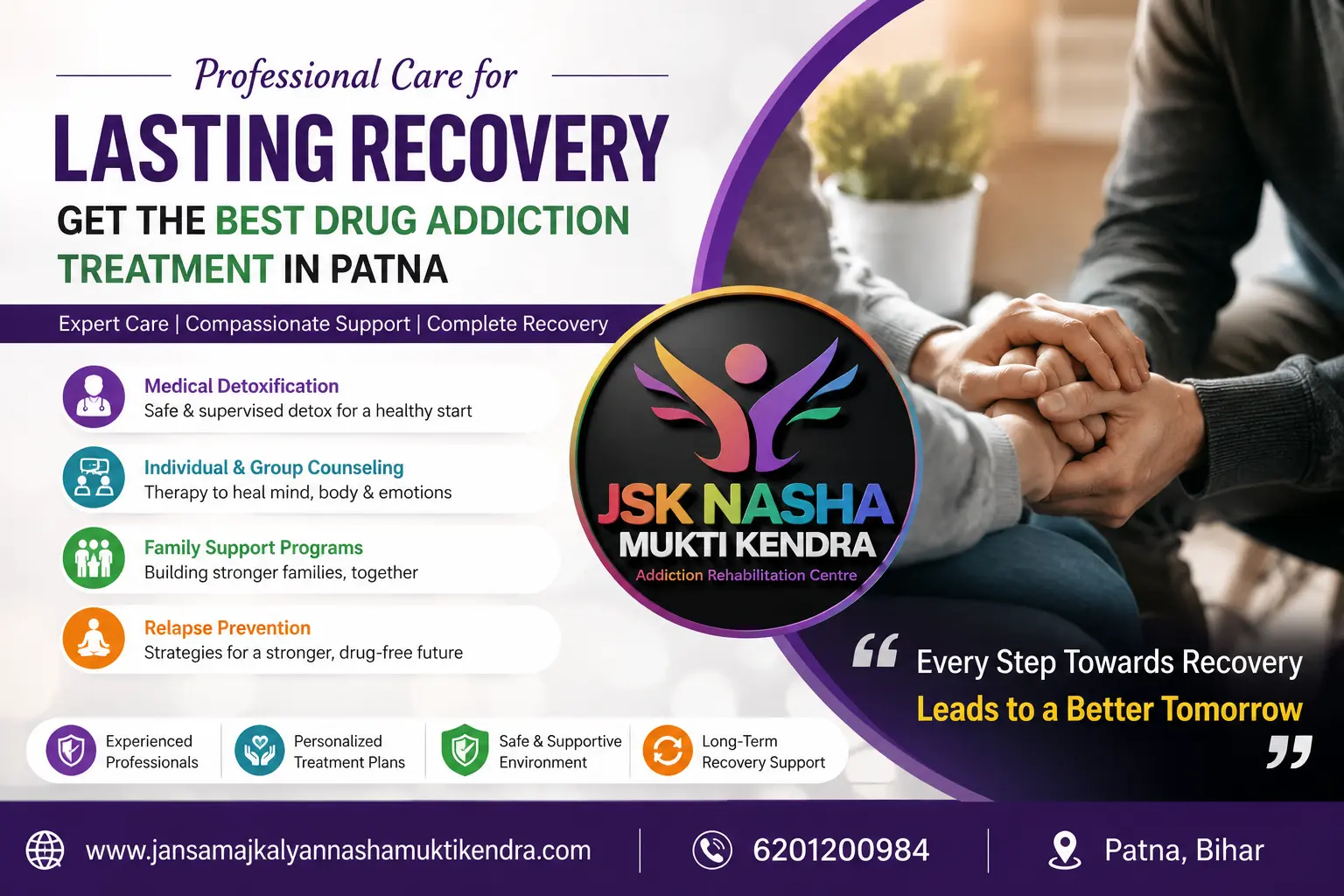
No one is immune to drug addiction, it can creep into any life, regardless of age, background or profession. In addition to all the physical symptoms, it impacts mental health, relationships, careers, education, economic security and more. For this reason, it is crucial that you connect with the best drug addiction treatment in Patna at the right time. Individuals can overcome drug addiction and get back on their feet with the help of a dedicated rehabilitation program, open dialogue, and medical attention. The sooner the intervention, the sooner the better, and the sooner someone has a real chance at a healthier, addiction-free life.
Understanding Drug Addiction
Drug addiction is essentially a chronic illness in which the body and mind develop an addiction to a substance such as opioids, heroin, cocaine, or methamphetamine, or even prescription drugs. Repeatedly using it doesn’t go away, and over time, the brain’s reward system also gets rewired such that a craving isn’t something that’s just a choice; it’s a physical pull that’s hard to resist on its own.
As addiction takes hold, it clouds judgment, disrupts emotional balance, and makes it harder to focus or function day to day. Many people keep using it even as their health deteriorates or their personal and professional lives fall apart around them. The first real step toward recovery is recognizing that addiction is a medical condition, one that can be treated, not a personal failing.
Why Choosing the Best Drug Addiction Treatment in Patna Matters
Getting the best drug addiction treatment in Patna isn’t just about stopping drug use, it’s about understanding why the addiction took hold in the first place. Good treatment digs into the physical, emotional, and psychological roots of the problem while equipping people with real coping skills for the long haul.
The right rehabilitation centre won’t offer a one-size-fits-all program. Instead, experienced specialists build a treatment plan around each person’s medical history, pattern of substance use, mental health, and personal recovery goals.
Common Signs of Drug Dependence
Early Identification is key, treatment can begin before the situation gets worse.
Strong and Frequent Cravings
People struggling with addiction often find themselves thinking about the drug constantly, unable to shake the urge to use. These cravings tend to bleed into work, studies, family life, and social relationships.
Increased Tolerance
As the body adjusts to a substance, it takes more and more of it to get the same effect. This increasing acceptance is not only a problem, it leads to a higher degree of dependence and health risks.
Withdrawal Symptoms
Cutting back or stopping altogether often brings on uncomfortable symptoms.
Including:
- Anxiety
- Irritability
- Sweating
- Restlessness
- Trouble sleeping
- Muscle pain
- Mood swings
- Fatigue
Without medical support, these symptoms can be intense enough to push someone right back to using.
Declining Physical and Mental Health
Over time, addiction can bring poor concentration, memory lapses, weight fluctuations, depression, anxiety, a weakened immune system, and a general loss of motivation. It’s common to see relationships strain, jobs slip, and academic performance decline as the addiction progresses.
How Professional Drug Addiction Treatment in Patna Supports Recovery
True recovery will require medical treatment and psychological assistance throughout the process.
Comprehensive Medical Assessment
Treatment begins with a comprehensive assessment of the individual’s physical health, mental state, substance use history and life situation. This is how experts are able to design a treatment program that is specific to each person, rather than a standard one.
Safe Medical Detoxification
Detox is to remove the harmful elements from the body while under medical care. Withdrawal symptoms are monitored, and appropriate medication is administered if necessary, to ensure a safe, comfortable and controlled withdrawal process.
Typically, medical detox will be conducted in the first place which provides a foundation, then therapy and more intensive rehabilitation will follow.
Individual Counseling
One-on-one counseling can assist individuals to explore the underlying emotional and behavioral issues that contribute to their addiction, such as unprocessed trauma, chronic stress, depression, anxiety, or coping mechanisms that no longer function. Patients also learn evidence-based methods that give them practical resources to use to stay sober long-term and to manage their cravings.
Behavioral Therapy for Long-Term Recovery
Behavioral therapy helps people trade unhealthy patterns for choices that actually support their well-being. It sharpens decision-making, strengthens emotional control, builds self-confidence, and improves problem-solving, all of which lowers the chances of relapse. Little by little, patients learn to face stress without reaching for a substance.
Group Therapy and Peer Support
It is easy to recover when people understand they are not alone. Group therapy provides a safe area for patients to share their experiences, provide encouragement to each other and learn practical solutions from other members of the group who have had comparable issues. This sense of shared experience fosters motivation, accountability and real hope.
Family Counseling
Addiction doesn’t just impact one person, it affects the entire family. Family counseling can restore trust and communication in the family and provide tools that can be used for a meaningful contribution during recovery. A positive and supportive family background is critical to long-term success.
Healthy Lifestyle Changes That Strengthen Recovery
Recovery isn’t only about medical treatment, it’s also about the everyday habits that keep body and mind steady.
Some of the most valuable changes include:
- Regular exercise
- Nutritious meals
- Adequate sleep
- Yoga and meditation
- Stress management
- Productive hobbies
- Positive social interactions
These small, consistent habits build emotional resilience and quietly reduce the risk of relapse over time.
Preventing Relapse After Rehabilitation
Recovery doesn’t stop the day treatment ends, it’s an ongoing process that depends on consistent follow-up and mindful choices.
Recognizing Personal Triggers
Patients learn to notice the situations, emotions, people, or environments that tend to spark cravings. Once those triggers are identified, it becomes much easier to respond differently.
Building a Strong Support Network
Family, counselors, recovery groups, and trusted friends all play a role in keeping someone steady and accountable when things get hard.
Continuing Professional Follow-Up
Ongoing counseling sessions and medical check-ins help people track their progress, work through new challenges, and stay confident as recovery continues.
Choosing the Right Rehabilitation Centre
Picking the right rehabilitation centre is one of the most important decisions in the recovery process.
Look for one that offers:
- Personalized treatment programs
- Qualified addiction specialists
- Medical detoxification
- Individual counseling
- Group therapy
- Family counseling
- Relapse prevention planning
- A safe, supportive, and confidential environment
Anyone searching for a trustworthy Nasha Mukti Kendra Patna should look for a centre focused on complete, lasting recovery, not just short-term detox. At Jan Samaj Kalyan Nasha Mukti Kendra, every patient’s journey is met with compassionate care, a personalized treatment plan, and guidance that extends well beyond the initial recovery phase. Taking that first step today can help someone regain their confidence, repair relationships, and build a healthier, drug-free future.
Before starting treatment, it’s worth understanding what trusted health organizations recommend. The World Health Organization (WHO) emphasizes evidence-based treatment, counseling, rehabilitation, and ongoing support as key pillars for anyone recovering from substance use disorders. Their official resources on substance use and mental health are a helpful starting point for understanding best practices.
Conclusion
Drug addiction can touch every part of a person’s life, but recovery is genuinely possible with timely help and the right professional care. Choosing the best drug addiction treatment in Patna opens the door to medical detoxification, counseling, behavioral therapy, family support, and structured rehabilitation, addressing both the physical and psychological sides of dependence, and giving people a real path back to themselves.
FAQs
1. What is drug addiction?
Drug addiction is a chronic medical condition in which a person becomes physically or psychologically dependent on drugs, making it difficult to stop despite harmful consequences.
2. What are the common signs of drug addiction?
Common signs include intense cravings, increased tolerance, withdrawal symptoms, mood swings, poor concentration, sleep disturbances, behavioral changes, and declining performance at work or school.
3. How is drug addiction treated?
Treatment usually includes medical detoxification, counseling, behavioral therapy, family support, rehabilitation programs, and relapse prevention strategies tailored to the individual’s needs.
4. How long does drug rehabilitation take?
The duration varies depending on the severity of addiction, the type of substance used, and the individual’s progress. Recovery may take several weeks to a few months.
5. Can drug addiction be completely cured?
Addiction is a manageable medical condition. With professional treatment, ongoing counseling, and lifestyle changes, individuals can achieve long-term recovery and maintain a drug-free life.