If someone in your family is dealing with substance use, you already know how messy it gets. It doesn’t stay in one corner of life. It creeps into health, money, sleep, relationships, work, everything. That’s really the whole point of Drug Addiction Treatment Patna. Not a magic fix. A proper process, step by step, involving medical checkups, safe withdrawal care, counseling, behavior work, rehab, and support that keeps going even after the “program” technically ends.
Once you actually understand how this works, the decision gets a lot less scary. It stops being “wait and see” and starts being a plan. And when that plan is built around the actual person, not some copy-paste template, recovery stops sounding like a slogan and starts looking doable.
Understanding Drug Dependence and Its Impact
Here’s the thing people get wrong a lot. Addiction isn’t just a bad habit you drop through willpower. It’s not that simple, and honestly, treating it like it usually backfires. Repeated substance use physically changes how the brain handles reward and decisions. That’s the actual reason cravings feel impossible to control, and why someone keeps using even after they’ve seen, clearly, what it’s costing them.
Depending on the substance, you might see shifts in sleep, appetite, mood, focus, energy. Sometimes all at once. And it doesn’t stay contained. Work suffers. Studies suffer. Friendships get strained or just quietly fall apart.
A few warning signs worth paying attention to:
- Cravings that show up often, or hit hard
- Needing more of the substance just to feel the same effect
- Trying to cut back and failing, repeatedly
- Losing hours to getting or using substances
- Letting responsibilities slide
- Withdrawal symptoms the moment use stops
- Continuing anyway, even with the damage staring them in the face
Catch these early and the whole recovery process tends to go smoother. Wait too long, and it gets harder on everyone.
Why Professional Drug Addiction Treatment Patna Is Important
Quitting alone sounds brave. In practice it’s often just risky. Withdrawal can hit fast and hard, cravings can be brutal, and without medical backup, relapse (or worse, real health complications) becomes way more likely. Professional care exists for exactly this reason. Specialists actually take the time to understand the physical side, the history, the emotional state, what recovery even means to that specific person.
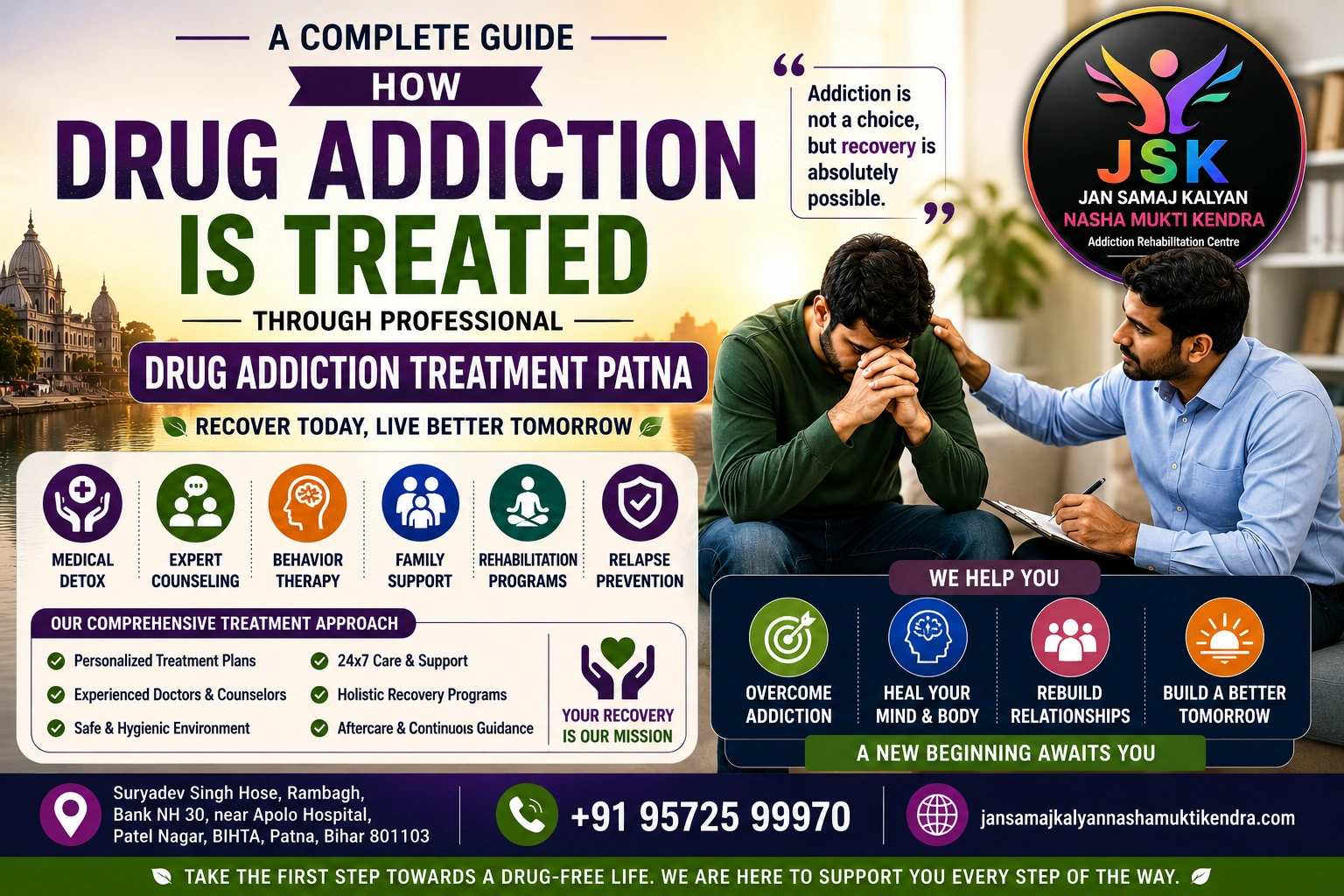
A solid program usually blends medical supervision, counseling, behavioral therapy, family involvement, and a real plan for avoiding relapse down the road. The key word there is “plan,” built for the person, not lifted from a template and handed to everyone who walks through the door.
So if you’re looking into Drug Addiction Treatment in Patna, for yourself or someone you love, look past the ones that just manage symptoms. Find one that treats the whole picture.
Assessment: The First Step in Addiction Recovery
Nothing useful starts without this. Skip it, and you’re basically guessing.
Medical and Substance-Use Assessment
What substance, how much, for how long, any past attempts to quit, past withdrawal experiences, existing health conditions. All of it matters here.
Psychological Assessment
Addiction almost never shows up alone. Stress, anxiety, depression, old trauma nobody’s talked about, family tension, peer pressure, one or several of these are usually sitting underneath the substance use. Find them, and the treatment plan actually makes sense. Skip them, and you’re just treating the symptom.
Personalized Recovery Planning
Once all that’s clear, the plan gets built around that one person. Might include detox, one-on-one counseling, behavioral therapy, structured rehab, family sessions, and aftercare that doesn’t just stop the day treatment “ends.”
Medical Detox and Withdrawal Management
Detox usually comes first. But here’s the part people miss: it’s one step, not the whole treatment. Thinking detox equals “cured” is a mistake that leads a lot of people right back to where they started.
When someone dependent suddenly stops, withdrawal kicks in. How rough it gets depends on the substance, how long it was used, how much, and the person’s general health.
Common withdrawal symptoms include:
- Anxiety, irritability
- Trouble sleeping
- Heavy sweating
- Restlessness
- Nausea
- Tremors
- Sudden mood swings
- Cravings that are hard to push past
Some withdrawal cases turn genuinely dangerous, medically. That’s exactly why anyone with real dependence needs supervised care, not a DIY attempt at home.
Counseling and Behavioral Therapy for Recovery
Stopping the substance is only the first part. The real work happens when someone starts understanding why they used it in the first place, the thoughts, emotions, and situations feeding it.
Individual Counseling
One-on-one time gives people a private space, no judgment, to talk through what’s actually going on. Triggers, relationships, stress, whatever it is. A decent counselor helps build better responses for the hard moments instead of just talking around them.
Behavioral Therapy
This is about spotting the patterns that aren’t working and replacing them with ones that do. Managing cravings, making better decisions under pressure, handling stress without spiraling, rebuilding some self-confidence along the way.
Group Counseling and Peer Support
Group sessions matter more than people expect. Hearing someone else describe the exact struggle you’re going through, that’s powerful. It builds accountability and a sense of belonging that one-on-one sessions just can’t fully replicate.
Family Support in Drug Rehabilitation in Patna
Addiction rarely stays contained to one person. Families end up carrying worry, frustration, money stress, broken trust, communication that’s fallen apart entirely.
Family counseling helps relatives actually understand what’s happening, and how to support recovery without accidentally enabling the same patterns. It also opens up real communication and helps set boundaries that protect everyone, not just the person in treatment.
If you’re comparing options for the Best Drug Addiction Treatment in Patna, family involvement shouldn’t be an afterthought. It’s often the difference between recovery that sticks and recovery that doesn’t.
Building a Healthy Routine After Treatment
Finishing the program isn’t the finish line. Not even close. What happens after, day to day, matters just as much, maybe more.
Habits worth building:
- Regular movement or exercise
- Actual balanced meals
- A sleep schedule that’s consistent
- Yoga, meditation, whatever helps quiet things down
- Hobbies that keep the mind busy in a good way
- Simple stress-management tools
- Time with people who genuinely support the recovery
- Staying clear of high-risk places and situations
None of these are dramatic on their own. But stacked together, consistently, they protect both the body and the mind long after treatment ends.
Relapse Prevention and Continuing Support
Recovery doesn’t stop when rehab does. That’s exactly why relapse prevention sits at the core of Drug Addiction Treatment Patna.
Identifying Triggers
People learn to spot the situations, emotions, people, or places tied to their past use, before those things turn into a problem again.
Managing Cravings
Coping strategies, ongoing guidance, supportive people around them, steady routines, all of it helps someone push through a craving instead of giving in to it.
Continuing Follow-Up
Regular check-ins catch trouble early, before it snowballs into something bigger. This kind of support tends to matter most during big life changes or stretches of high stress.
Choosing the Right Rehabilitation Centre
Before settling on one, check whether it actually offers:
- A plan built around the individual, not a fixed template
- Qualified, experienced professionals
- Real medical supervision throughout
- Both individual and group counseling
- Behavioral therapy
- Family involvement
- A clear relapse-prevention strategy
- An environment that feels safe and respectful
- Support that continues after the program ends
A genuinely good centre explains its approach honestly and helps you make an informed call, not promises of overnight miracles.
Looking into a Nasha Mukti Kendra Patna? Find one that treats the dependence itself and whatever’s feeding it underneath, not just one or the other.
The World Health Organization (WHO) and UNODC keep saying the same thing in their guidelines: treatment should be accessible, evidence-based, ethical, and shaped around the individual, not a one-size-fits-all program handed to every patient the same way.
Conclusion
Recovering from drug dependence is possible. But it usually takes more than willpower alone, that part’s rarely mentioned enough. Drug Addiction Treatment Patna brings together assessment, safe withdrawal care, counseling, behavioral therapy, family involvement, rehabilitation, and support that keeps going, to help people build something that actually lasts.
At Jan Samaj Kalyan Nasha Mukti Kendra, the focus stays on care that’s personal and genuinely compassionate, built around what each person actually needs, not a script. With the right guidance and steady support behind them, people really can rebuild, better health, stronger relationships, real confidence, and a future that feels stable again.
High-Search FAQs
1. What is Drug Addiction Treatment?
It’s a structured process built to help people overcome substance dependence, through assessment, safe withdrawal management, counseling, behavioral therapy, rehabilitation, and support that continues long after.
2. What happens during drug rehabilitation?
Usually starts with an assessment, then medically supervised withdrawal if it’s needed. After that, counseling, behavioral therapy, family support, and a relapse-prevention plan all come into play.
3. Is drug addiction completely treatable?
Recovery is genuinely possible, but it’s rarely a one-time fix. It’s ongoing. Continued support, healthy routines, follow-up care, and relapse-prevention strategies all help keep the progress from slipping.
4. How long does drug rehabilitation take?
Depends on the substance, how severe the dependence is, overall health, withdrawal needs, and how the person responds along the way. A proper assessment gives a realistic timeline instead of a guess.
5. Is family counseling useful during addiction recovery?
Yes. It genuinely helps. Better communication, better understanding of what addiction actually is, rebuilt trust, and real tools for supporting someone through recovery the right way.