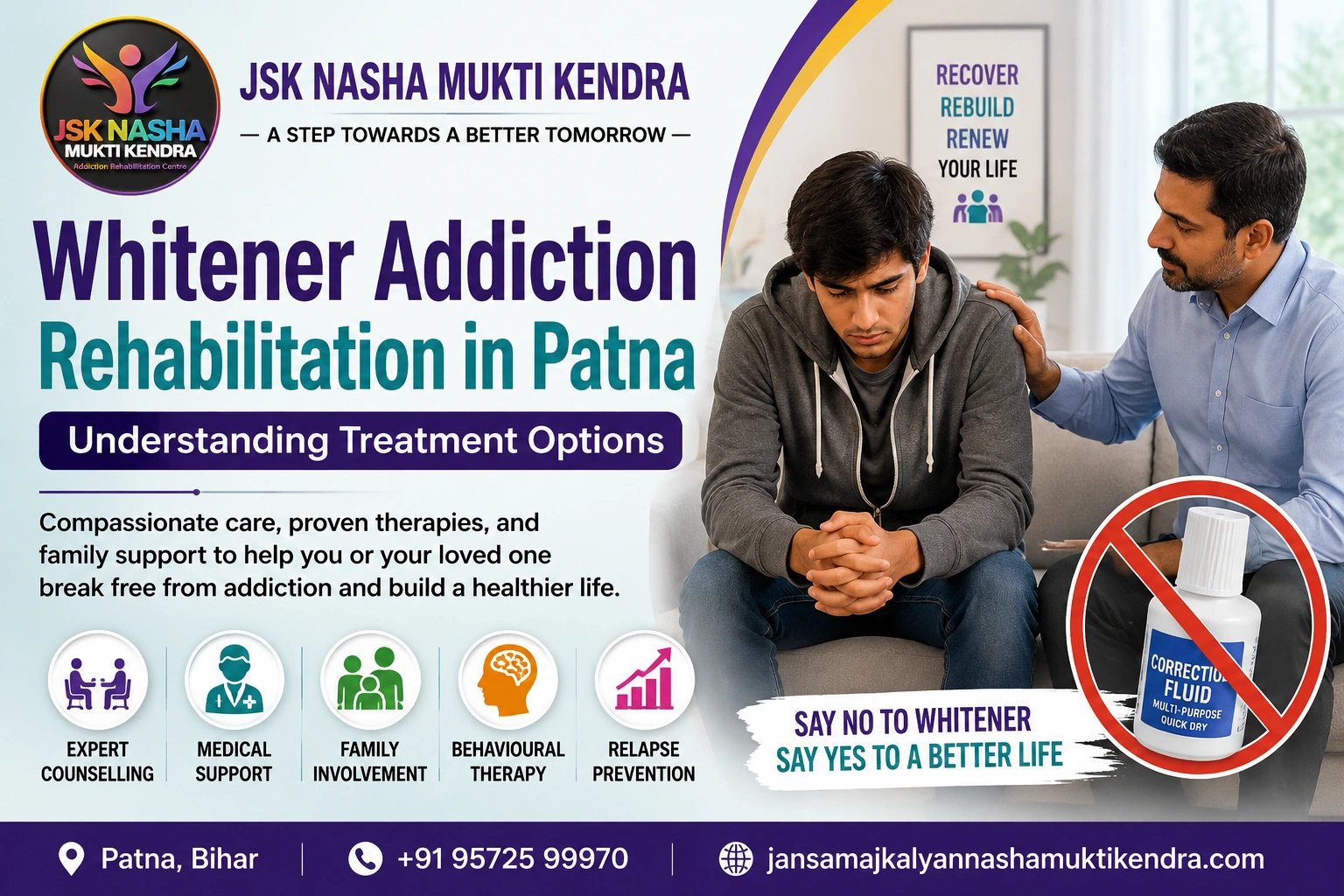
It usually starts with something small. A kid seems a little foggier than usual. Someone’s sleep schedule goes weird. Grades slip, or work just isn’t getting done, and nobody can quite point to why. Whitener misuse, sometimes called correction fluid abuse, tends to creep in like that. Quiet at first, then suddenly not.
By the time most families realize what’s actually going on, the habit has often been around for a while. That’s really the whole point behind Whitener Addiction Rehabilitation in Patna. Catching it early, before it digs in deeper, makes the road back so much easier. Below, we’ll walk through what whitener addiction actually looks like, when it’s time to step in, and how a proper nasha mukti kendra in Patna actually approaches treatment.
What Is Whitener Addiction and Why Does It Need Treatment?
Whitener, or correction fluid, contains chemical solvents that were obviously never meant to be inhaled. But some people, often teens or young adults, start sniffing it on purpose to feel a quick high. And over time, that can turn into something a lot harder to walk away from than anyone expected.
The effects aren’t the same for everyone. It really depends on how much someone’s using, how often, and their general health. You’ll commonly see dizziness, headaches, nausea, confusion, and poor coordination. In worse cases, it can turn into a genuine medical emergency.
Here’s the honest truth, though: just telling someone to stop rarely does anything. There’s almost always something underneath it, stress, peer pressure, some emotional weight they’re carrying. That’s why proper whitener addiction treatment in Patna starts by digging into those triggers instead of just addressing the surface behaviour.
Whitener Addiction Rehabilitation in Patna: When Should Families Seek Help?
So how do you know it’s time to actually reach out? Generally, once the use starts feeling frequent, secretive, or just plain out of control. Watch for sudden mood swings, dropping grades or output at work, pulling away from the family, spending that doesn’t add up, a new friend group, poor personal hygiene, or someone clearly trying to hide what they’re doing.
One of the biggest red flags, honestly, is repeated failed attempts to quit. If someone keeps saying “I’ll stop” and then doesn’t, that’s usually not a willpower problem. It’s a sign they need real, structured support.
This matters even more for young people, where stepping in early can change everything. As a parent or family member, try not to shame, threaten, or corner them. A calm conversation, followed by an actual professional assessment, tends to open far more doors than pressure ever will.
How Whitener Addiction Treatment in Patna Can Begin
No two people end up misusing whitener for the exact same reasons, so it wouldn’t make sense to treat everyone the exact same way either. A solid recovery programme starts by understanding the person, not by running them through a generic checklist.
Initial Assessment and Individual Recovery Planning
The first step is simple: understand where the person actually stands. A qualified professional will usually ask how long this has been going on, how often it happens, what’s already been tried, and whether there are physical or emotional symptoms worth flagging.
From that conversation, an individualized recovery plan starts to take shape. Both the WHO and UNODC are pretty clear on this: substance-use treatment works best when it’s evidence-based, ethical, and built around the person, not copied and pasted from a template.
Medical Evaluation and Safe Monitoring
Some people genuinely need a medical evaluation, especially if there’s been serious chemical exposure or noticeable physical symptoms. And a responsible programme will never push someone toward unsupervised detox or self-medication, that’s just not how safe recovery works.
If someone shows severe confusion, trouble breathing, loses consciousness, or has a seizure after inhaling whitener, that’s an emergency. Get medical help immediately. Don’t wait for the next scheduled appointment.
Counselling and Behavioural Support
Counselling ends up being one of the most important pieces here. It helps someone actually understand why the habit took hold in the first place, and it helps identify what triggers the urge to use again. Sessions often touch on stress, peer pressure, emotional struggles, family tension, low motivation, and coping patterns that just aren’t working anymore.
Psychological and psychosocial support are considered core to modern substance-use care, not an add-on. The WHO specifically calls out psychosocial approaches as essential to evidence-based treatment for people dealing with substance-use disorders.
Family Counselling and Support
Recovery was never meant to be a solo project. Families often need their own guidance too, on how to communicate better, set boundaries that actually hold, offer encouragement without hovering, and recognize the early signs of a relapse before it snowballs.
Instead of falling into a cycle of blame (which, let’s be honest, almost never helps), families can learn to stay supportive while still holding firm boundaries. A calmer, more supportive home genuinely makes it easier for someone to stick with treatment and build healthier routines over time.
Choosing the Best Whitener Addiction Treatment in Patna
When you’re researching the best whitener addiction treatment in Patna, don’t just go by whichever ad looks the most polished. Look instead at the actual quality and fit of the programme itself.
Look for Assessment-Based Treatment
A trustworthy centre always starts with understanding the individual first, not by dropping them straight into a standard protocol. Treatment should shift based on age, history with substance use, physical health, psychological needs, and what’s happening at home.
Consider Counselling and Long-Term Recovery Support
Quitting the substance itself is really just one piece of the puzzle. A good rehabilitation center in Patna should also help build coping skills, healthy daily habits, better communication, and strategies for the moments that used to trigger relapse.
The WHO frames substance-use care as a continuum, covering assessment, treatment planning, psychosocial support, rehabilitation, and continued recovery care, not a single event that ends once the programme is over.
Ask About Family Involvement
Family involvement matters a lot, especially when the person is young or relies on relatives for everyday support. Before picking a centre, ask exactly how they keep families in the loop and what kind of guidance is offered, both during treatment and after it wraps up.
What Happens During Whitener Addiction Rehabilitation?
Rehabilitation isn’t just about keeping someone physically away from the substance. The bigger goal, really, is helping them rebuild habits that actually work and get back to functioning in everyday life.
Creating a Structured Daily Routine
A structured environment naturally cuts down exposure to negative influences while giving someone the consistency they’ve probably been missing. Daily routines usually include counselling, appropriate recreational time, decent meals, real rest, personal responsibilities, and recovery-focused work.
Developing Relapse-Prevention Skills
Relapse prevention is basically about spotting the risky moments before they turn into a full setback. People learn how to manage stress, avoid situations that put them at risk, speak up when they need help, and reach out for support before a small slip becomes something bigger.
Rebuilding Confidence and Social Functioning
Addiction touches nearly everything, education, work, relationships, self-esteem, all of it. That’s why rehabilitation has to look at the whole person, not just the substance use. The WHO describes rehabilitation for substance-use disorders as a longer-term process involving psychosocial, medical, and recovery-oriented care.
Why Professional Support Matters
Because whitener is such an everyday, easy-to-find product, it’s also easy to underestimate. But deliberately inhaling it is a completely different thing from normal use, and it genuinely carries real health risks.
Professional support gives families a clear, structured way to identify what’s actually going on, check for health concerns, and build a real recovery plan, instead of guessing and hoping for the best.
If you’re searching for Whitener Addiction Rehabilitation in Patna, look for care that feels safe, respectful, and centred on the individual, not centres promising a quick fix that sounds too good to be true.
How Families Can Support Recovery at Home
Support doesn’t just stop once a structured programme ends. Family members can keep encouraging good sleep, decent nutrition, productive activities, and positive relationships. At the same time, stay alert to warning signs without turning every single conversation into an interrogation, that tends to backfire.
Honest, open communication really does go a long way here. If cravings, emotional struggles, or renewed use show up again, encouraging the person to reach out to their treatment team early can stop a small setback from turning into a much bigger one.
For more on evidence-based treatment and care for substance-use conditions, families can check the World Health Organization’s guidance on treatment and care, which highlights just how important accessible, high-quality services really are.
Getting Support for Recovery in Patna
Choosing treatment is a big step, sure, but families really don’t need to wait until things get severe. If whitener misuse is affecting someone’s health, education, work, relationships, or day-to-day life, a professional assessment can help make clear exactly what kind of support is actually needed.
Jan Samaj Kalyan Nasha Mukti Kendra offers a recovery-focused space where individuals and families can find guidance for substance-use concerns. At the end of the day, rehabilitation is about supporting healthier behaviour, building real coping skills, and helping someone move toward a more stable, responsible life.
If you’re looking for a nasha mukti kendra Patna, pay close attention to the centre’s treatment approach, counselling support, how they involve family, and what aftercare actually looks like before making a decision.
Conclusion
Whitener misuse shouldn’t get brushed off just because the product itself is common and easy to grab. Once repeated use starts affecting behaviour, health, education, work, or relationships, reaching out for professional guidance is really the responsible next move. A well-structured rehabilitation approach handles the substance use itself while also supporting psychological wellbeing, family relationships, and the long-term skills that keep recovery going.
For families researching Whitener Addiction Treatment in Patna, the most important thing is choosing care that’s safe, individualized, and focused on lasting recovery, not quick, hollow promises.
Frequently Asked Questions About Whitener Addiction Treatment
1. Can whitener misuse become addictive?
Yes. Repeated misuse of inhaled chemical products can genuinely turn into a problematic pattern of substance use. A professional assessment helps figure out how serious it is and what level of care makes sense.
2. What are common signs of whitener misuse?
Keep an eye out for repeated or secretive use, unusual chemical smells, dizziness, headaches, behavioural shifts, dropping performance, pulling away socially, and repeated failed attempts to quit. These can point to other things too, so it’s worth getting a proper assessment either way.
3. Is counselling useful for whitener addiction?
Definitely. Counselling helps address triggers, emotional difficulties, and coping habits tied to substance use. It works best when it’s built around the individual rather than following some generic script.
4. How long does rehabilitation take?
Honestly, there’s no fixed timeline that fits everyone. It comes down to how severe the use has been, the person’s health needs, how treatment is progressing, and what they actually need for lasting recovery. WHO guidance leans firmly toward individualized treatment over a set duration.
5. Can family members participate in recovery?
Yes, and it genuinely helps. Family involvement improves communication, offers meaningful support, and helps build healthier routines at home. It also teaches families how to spot warning signs and respond in a way that actually helps.