If you’re reading this because someone you love is struggling, you’ve probably already typed how to treat heroin addiction into a search bar more than once, usually late at night, usually after another broken promise to quit. That’s normal. Families rarely search for this stuff until things have already gotten hard.
Heroin dependence has a nasty habit of spreading into every part of someone’s life. It starts small, maybe just weekends, and then one day it’s running the whole show. Health goes downhill. Relationships get strained. Work suffers. Money disappears. Even basic stuff like showing up on time or remembering to eat starts falling apart. Watching that happen to someone you care about is exhausting, especially when you’ve already tried to help and it hasn’t stuck.
Here’s the honest truth though: this is treatable. Not in a “just say no” kind of way, but in a real, medically backed way. Figuring out how to treat heroin addiction isn’t about gritting your teeth through a rough weekend and hoping for the best. It means dealing with the physical dependence, the cravings that show up out of nowhere, the emotional stuff underneath it, and the situations that make going back so tempting. With the right assessment and steady support, people genuinely rebuild their lives.
Understanding Heroin Dependence and Its Effects
Heroin is an opioid. It hits fast and produces that intense rush of euphoria people chase, and that’s part of why it’s so dangerous. The brain and body adapt quickly to repeated use, and before long, someone isn’t used to feeling good anymore. They’re using it just to feel normal, just to avoid the misery of withdrawal.
This is exactly why heroin addiction is so brutal to fight with willpower alone. It’s not a character flaw. The brain chemistry has genuinely changed.
Physical dependence can show up as restlessness, sweating, aching muscles, nausea, broken sleep, anxiety, and cravings strong enough to override logic the moment use is cut back or stopped. How rough this gets depends on the person, how long they’ve used, and their overall pattern of use.
Long term use also drags along serious risks. People who inject the drug face things like infections and blood borne diseases, and an opioid overdose can slow breathing down to a dangerous crawl or stop it completely.
How to Treat Heroin Addiction: A Step by Step Approach
There’s no one size fits all playbook here, and be wary of anyone who claims there is. Real, professional care starts with a proper assessment so the treatment team actually understands the person in front of them, their history, their physical health, their mental health, their family situation, and whatever they’ve already tried.
Medical Assessment Comes First
Understanding how to treat heroin addiction really starts here, with a proper medical assessment. This step figures out how deep the dependence goes and whether other health issues are hiding underneath it. Doctors or trained healthcare professionals will usually ask about which opioid was used, how often, for how long, past attempts to quit, current medications, and anything else being taken alongside heroin.
Heroin dependence carries real medical risk, and skipping this stage in favour of trying to detox alone at home can genuinely be dangerous. A plan built around the actual person is safer, plain and simple.
Managing Withdrawal and Early Recovery
Once heroin use stops, withdrawal shows up, and it’s rough. Physically uncomfortable, emotionally draining, sometimes overwhelming. This is honestly one of the biggest reasons people go back to using even when they desperately want to stop.
Treatment professionals step in here, keeping a close eye on the person and offering real medical support along the way. Depending on the individual, opioid dependence treatment may include medicines like methadone or buprenorphine, with naltrexone considered in certain cases. None of these should ever be self managed. Medical supervision matters, every time.
The World Health Organization backs this up too, recognising pharmacological treatment alongside psychosocial support as a core piece of opioid dependence care. You can read more directly from the World Health Organization on this.
Counselling and Behavioural Support
Stopping the drug is only half the job. The other half is figuring out why someone started using in the first place, and which situations still pull them back toward it.
Counselling for addiction helps people notice their own triggers, work through hard emotions without spiralling, build coping tools that actually hold up, and make better calls in the moment instead of on autopilot. This often works best paired with group sessions, family involvement, behavioural techniques, and other support shaped around what that specific person needs.
Honestly, this stage might be the most important part of the whole process. Real recovery keeps going long after the physical symptoms have quieted down.
What Happens During Heroin Addiction Treatment?
A structured rehabilitation programme is central to how to treat heroin addiction successfully, not just get through detox. It gives someone a stable space to actually focus on getting better, away from the same old pressures tied to their past use.
Creating a Structured Daily Routine
Addiction wrecks the basics. Sleep, meals, work, exercise, relationships, all of it gets thrown off. A structured environment slowly helps put those pieces back together.
A solid routine usually mixes scheduled counselling, recreational time, actual rest, decent meals, personal responsibilities, and sessions built specifically around recovery. This isn’t about keeping someone busy for the sake of it. It’s about rebuilding a whole lifestyle that supports staying sober for the long haul.
Identifying Triggers and Preventing Relapse
Triggers show up everywhere. People, places, certain emotions, old memories, money stress, arguments, situations tied to past use. Spotting these ahead of time gives someone an actual chance to prepare instead of getting blindsided.
Relapse prevention usually covers building real coping strategies, learning to ride out cravings instead of giving in, forming relationships that actually support recovery, avoiding high risk situations, and having a clear plan for reaching out when things get hard.
And if relapse does happen? That’s not the end of the story. It usually just means the plan needs adjusting, not that everything failed.
Family Involvement Can Make a Difference
Families need support too, honestly just as much as the person struggling does. Addiction leaves a household full of arguments, broken trust, money problems, and plain emotional exhaustion. Family counselling or education sessions help relatives understand what’s actually going on without sliding into blame or accidentally enabling the behaviour.
Instead of focusing on what someone did wrong, families can learn better ways to talk to each other, set boundaries that actually hold, and keep encouraging professional support without hovering.
Choosing Heroin Addiction Treatment in Patna
For families looking into Heroin Addiction Treatment in Patna, the first thing worth checking is whether a centre or healthcare team takes a personalised, medically responsible approach, not some generic template applied to everyone who walks through the door.
Before picking a facility, it’s worth asking:
Is the person’s physical and psychological condition properly assessed before treatment even begins? Is medical support available whenever it’s actually needed? Does the programme genuinely include counselling and behavioural support? Is there a structured daily routine built into the rehab process? Does the centre involve families in a meaningful, ongoing way? Is there a plan for continued support once residential treatment wraps up? Are treatment decisions shaped around the person’s actual needs, not a copy paste programme?
These questions help families make a more informed choice instead of picking somewhere based purely on flashy advertising.
Anyone comparing options for the Best Heroin Addiction Treatment in Patna should look past labels like “best” entirely and actually dig into the quality, safety standards, professional involvement, treatment approach, and aftercare support a centre genuinely provides.
Why Professional Support Is Important
Trying to handle heroin dependence alone, without professional guidance, is genuinely tough, especially with physical dependence and intense cravings in the mix. Professional treatment gives someone real access to assessment, supervision, counselling, and ongoing recovery support inside a planned, safe setting. This is really the core answer to how to treat heroin addiction long term: steady professional care paired with family involvement, not a single fix.
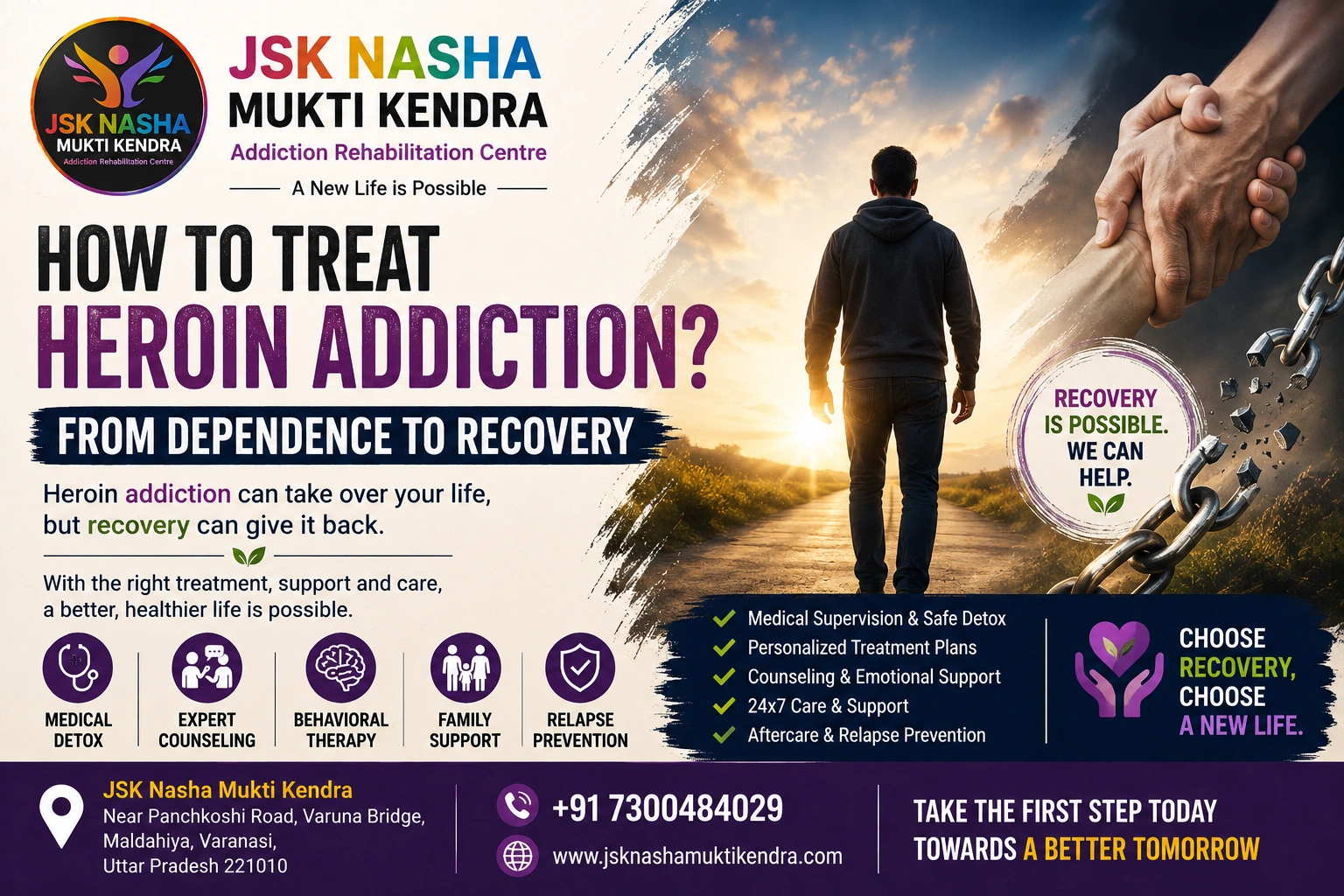
At Jan Samaj Kalyan Nasha Mukti Kendra, the focus stays on helping people step away from harmful substance use while building healthier routines, better coping skills, and habits that support long-term recovery. Families looking for a Nasha mukti kendra Patna can explore professional rehabilitation support based on individual needs.
Treatment shouldn’t be seen as something that just ends the moment detox is over, because it doesn’t work that way. WHO guidance is clear that opioid dependence care should combine medication based treatment with psychosocial support, and that sticking with appropriate treatment matters a lot for people who need it long term.
How Long Does Heroin Recovery Take?
There’s no universal timeline here, and anyone who promises one is probably overselling. Some people need intensive residential support. Others do just fine with outpatient services and regular counselling.
How long treatment takes usually comes down to how severe and long the heroin use has been, the person’s physical and mental health, any previous attempts at recovery, their family environment, personal motivation, and how they respond to the programme itself.
It’s also worth remembering recovery doesn’t stop the day someone walks out of a rehabilitation centre. Ongoing counselling, family support, healthy daily habits, follow up care, and relapse prevention planning all keep that progress moving forward.
Anyone researching Heroin Addiction Treatment Patna options will genuinely get more out of a programme that thinks about both immediate treatment needs and long term recovery, rather than one that stops caring the moment detox ends.
What Families Can Do to Support Recovery
Family support can genuinely move the needle here, but relatives shouldn’t carry the weight of thinking it’s all on them to fix.
A better approach looks like encouraging professional assessment, communicating without constant criticism, not handing over money that could end up funding drug use, and holding onto reasonable boundaries even when it’s hard. Families need to take care of their own emotional wellbeing through all this too.
Small things really do add up. Encouraging regular meals, decent sleep, healthy activities, staying on top of counselling appointments, and keeping positive relationships close all help build an environment where recovery actually has a shot at sticking.
And maybe the most important thing: don’t wait for a full blown crisis before reaching out for professional help. Getting in early almost always opens up more options.
When Immediate Medical Help May Be Necessary
Heroin and other opioids can cause an overdose, especially when breathing slows down dangerously or stops altogether. Signs of a possible opioid overdose include extreme drowsiness, not being able to wake the person up, very slow or absent breathing, and total unresponsiveness.
An overdose is a medical emergency, no question about it. Call emergency medical services immediately. Naloxone can reverse an opioid overdose if it’s given quickly enough, and WHO recommends making naloxone available to anyone who might witness an opioid overdose happening in real time.
For solid, reliable information on opioid dependence, overdose prevention, and evidence based treatment, families can also check World Health Organization resources before making any big treatment decisions.
Conclusion
So, how to treat heroin addiction really isn’t a question with one neat, tidy answer. Effective recovery usually means understanding the person’s dependence, managing withdrawal safely, working through the psychological and behavioural side of things, building real relapse prevention skills, and sticking with appropriate follow up support long after treatment officially ends.
Heroin dependence can be serious, no doubt about that, but reaching out for professional help is a strong step forward, not something anyone should feel ashamed of. With the right assessment, structured care, counselling, medical support where it’s needed, and steady family involvement, a person really can build a life that’s less about heroin and more about health, stability, and lasting recovery.
Frequently Asked Questions
1. How to treat heroin addiction effectively?
Treatment generally involves a professional assessment, safely managing withdrawal, appropriate medical care, counselling, behavioural support, relapse prevention planning, and ongoing follow up. The exact approach really depends on the person and what they actually need.
2. Can heroin addiction be treated without rehabilitation?
Some people manage fine with outpatient treatment, while others genuinely need residential rehabilitation. The right setting depends on things like how severe the dependence is, the home environment, past treatment history, and medical or psychological needs.
3. Is heroin withdrawal dangerous?
Heroin withdrawal can be extremely uncomfortable and bring on serious physical and psychological symptoms. Professional assessment is strongly recommended, especially for people with heavy or long term opioid use, or other health concerns layered on top.
4. What medicines are used for heroin dependence?
Depending on the situation, qualified clinicians may consider medicines like methadone, buprenorphine, or naltrexone as part of opioid dependence treatment. These calls should always be made by trained healthcare professionals, never figured out alone.
5. How long does heroin addiction treatment take?
There’s no fixed timeline. How long treatment takes depends on the person’s level of dependence, overall health, how they respond along the way, past recovery attempts, and the kind of ongoing support they’ll need going forward.