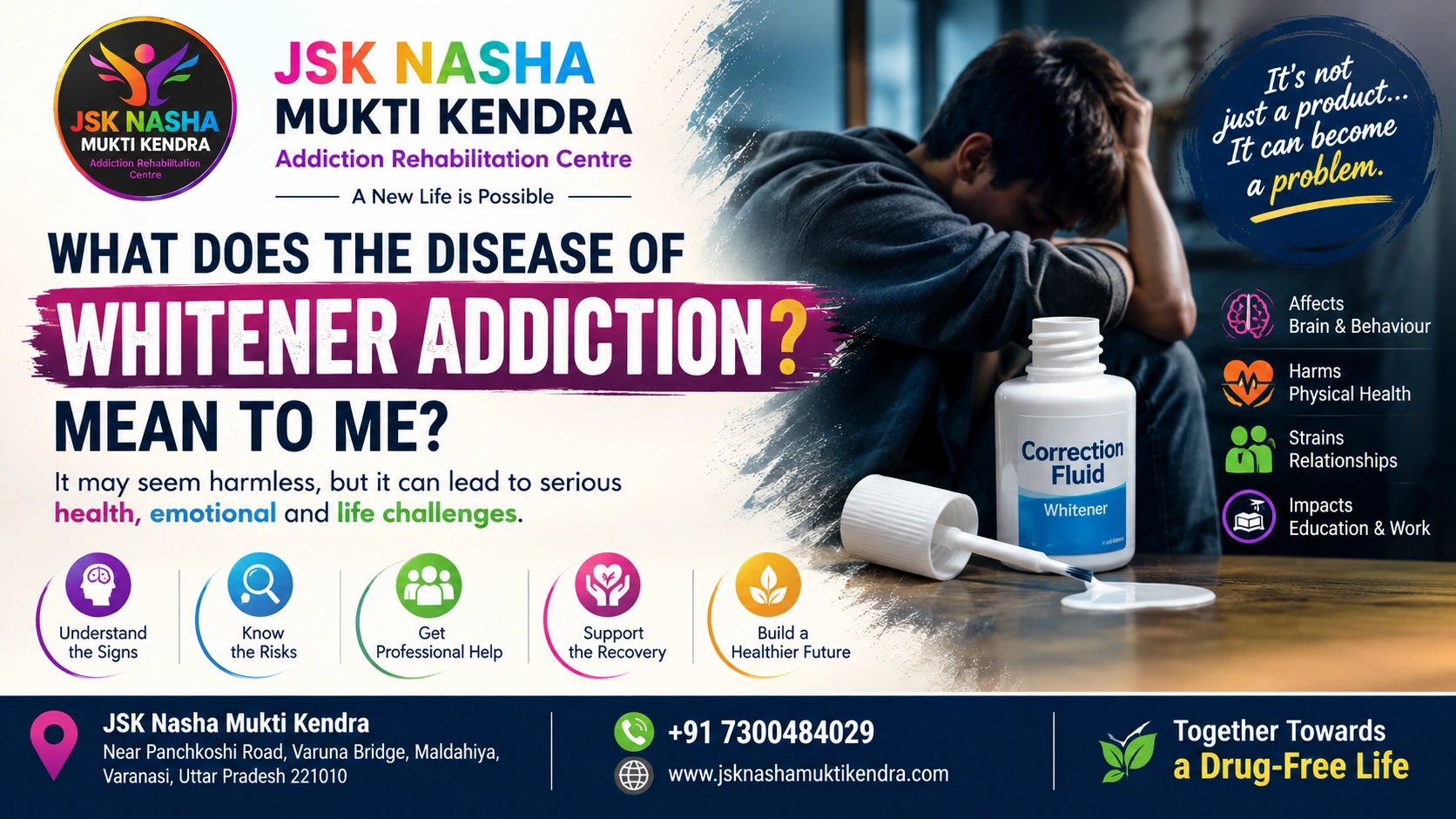
Whitener addiction mean is one of those problems that hides in plain sight. Because the product itself is something we all grew up seeing in school bags, offices, and kitchen drawers, it rarely gets a second look. But certain correction fluids and similar products contain volatile chemicals that can affect the brain when someone deliberately breathes in the fumes. When this happens again and again, it can turn into a real substance use problem, one that touches health, behaviour, relationships, education, and everyday routine.
If you are a parent, sibling, or friend trying to make sense of this, the confusion is completely normal. It is hard to understand why a person keeps going back to something that is so obviously hurting them. The first step is to stop focusing on the product itself and start paying attention to the behaviour, the risks involved, and why professional help often becomes necessary.
What Does Whitener Addiction Mean?
People often ask what whitener addiction mean in practical terms, and the honest answer is that it depends on the person. In everyday conversation, folks use the word “addiction” loosely, but a real diagnosis takes into account the pattern of use, the symptoms a person shows, the effect on their health, and how much it is interfering with daily life.
Whitener products can contain solvents and other volatile chemicals. When someone inhales these vapours on purpose, it can bring on dizziness, confusion, poor coordination, drowsiness, or a general change in how they perceive things around them. The World Health Organization actually recognises disorders linked to volatile inhalant use as a genuine category of substance use disorder, not just a bad habit.
Things get more serious when a person keeps using the product even after it starts causing health issues, upsetting the family, or making it hard for them to keep up with school, work, or basic responsibilities.
Understanding Whitener Addiction and Solvent Dependence
Whitener addiction mean often comes up in the same breath as inhalant addiction, solvent addiction, and inhalant abuse, mainly because many of these products share similar volatile substances that act on the central nervous system.
Not everyone who tries an inhalant even once ends up dependent on it. That said, repeated harmful use should never be brushed off just because the product sits legally on a store shelf or is something you’d find in almost any home, school, or office.
What really matters here is the pattern, not the label on the bottle. If a person keeps seeking out the product for its effects, hides how often they use it, feels strong urges to use again, or keeps going despite clear consequences, it is worth getting a professional opinion on what is actually happening.
Signs of Whitener Addiction to Watch For
Families usually notice something is off long before the person struggling admits there is a problem. These changes can show up physically, emotionally, behaviourally, or socially.
Physical and Behavioural Warning Signs
Some of the more common signs of whitener addiction include an unusual chemical smell on the person or their belongings, irritation around the nose or mouth, frequent headaches, dizziness, clumsy movements, slurred speech, ongoing tiredness, confusion, or sudden changes in appetite.
Behaviour matters just as much as physical symptoms. A person might turn secretive out of nowhere, lose interest in school or work, start spending far more time alone, get irritable over small things, or repeatedly go looking for correction fluids, solvents, or similar products.
No single sign on its own proves addiction. But when several of these changes show up together and stick around, it is worth taking seriously.
Emotional and Social Changes
Substance misuse rarely stays contained to just the physical side. It tends to spill over into mood and relationships too. Someone dealing with regular inhalant misuse might seem unusually anxious, withdrawn, restless, confused, or emotionally up and down.
Parents and family members often notice more frequent arguments at home, or watch the person’s interest in things they once enjoyed slowly fade away. Grades or work performance can start slipping as well.
It helps to approach these changes with concern rather than blame or humiliation. Shame tends to push people further into silence instead of encouraging them to open up.
Health Effects of Whitener and Inhalant Misuse
The actual health risks depend on which chemicals are involved, how much exposure there has been, the person’s overall health, and how often they are using. Some volatile substances go straight for the brain and nervous system, while others can quietly damage different organs over time.
According to WHO, inhalant exposure can cause nausea, vomiting, headaches, confusion, disorientation, weakness, tremors, and even visual disturbances. In severe cases, it can lead to loss of consciousness, coma, or death.
How Inhalants Can Affect the Brain and Body
The brain takes the brunt of it because inhaled volatile chemicals move into the bloodstream and nervous system almost immediately. Repeated exposure can chip away at concentration, coordination, memory, judgement, and general behaviour over time.
Some of these products irritate the respiratory system as well, and certain chemicals can be toxic to organs like the liver, kidneys, heart, or brain. How much damage occurs really comes down to the specific substance involved.
This is exactly why inhalant misuse should never be treated as harmless just because the product itself was made for an everyday, ordinary purpose.
Why Does Whitener Addiction Develop?
There is almost never one single reason behind a problem like this. Curiosity, pressure from friends, emotional distress, family tension, stress, social circumstances, and simple access to the product can all play a role, sometimes all at once.
For many people, the pull starts with wanting to escape uncomfortable feelings or briefly change how they feel inside. Once that behaviour repeats, it can settle into a pattern that becomes genuinely hard to break on their own.
Psychological Factors Behind Inhalant Misuse
A person struggling with anxiety, loneliness, low mood, unresolved trauma, academic pressure, or relationship problems may turn to substances as a coping mechanism, even if they do not fully realise that is what is happening.
That does not mean everyone facing emotional struggles will end up with an addiction. It simply shows why good treatment needs to look at the whole person rather than zeroing in on the substance alone.
Counselling can help someone recognise their triggers, understand the coping patterns that are not serving them, and build safer, healthier ways of handling tough emotions.
How Is Whitener Addiction Treated?
Good treatment always starts with a proper assessment. Since different products can contain different chemicals, the treatment plan should be built around the person’s actual pattern of use and current health condition, not a generic template.
A solid professional programme usually includes medical evaluation, counselling, behavioural support, involvement from the family, structured daily routines, and ongoing monitoring after the initial phase.
Assessment and Individualised Treatment Planning
The first step is simply understanding what has actually been going on. A professional will typically ask about the type of product used, how often, for how long, any physical symptoms, emotional changes, other substances involved, and past attempts to quit.
This information shapes exactly how much support a person needs going forward.
There is no one-size-fits-all formula here. Someone who has misused a product occasionally has very different needs from someone whose entire daily life has been disrupted by ongoing inhalant addiction.
Counselling and Behavioural Support
Counselling plays a central role in inhalant addiction treatment. It gives a person a safe, judgement-free space to talk through cravings, emotional triggers, family friction, stress, and the specific situations tied to their substance use.
Over time, this helps someone build practical tools for getting through difficult moments without falling back into harmful use.
Family counselling matters here too. Relatives often need help understanding what their loved one is going through, learning to communicate better, setting healthy boundaries, and supporting recovery without constant arguing or blame.
Choosing the Right Whitener Addiction Rehabilitation in Patna
Families looking into Whitener Addiction Rehabilitation in Patna should look past the promotional language and dig into what the programme actually offers. A good rehabilitation centre takes a person’s physical and emotional needs seriously, not just their symptoms.
Ask whether the centre offers a proper assessment, individual counselling, structured daily routines, family guidance, professional medical supervision, and continued support after the programme ends.
Anyone researching the best whitener addiction treatment in Patna should compare the real treatment approach at each centre, rather than picking one simply because their website uses words like “best” or “leading.”
What Families Should Ask Before Choosing a Centre
Before committing to a programme, it helps to ask a few direct questions:
How is the person’s condition assessed? Is professional medical support available whenever it’s needed? Does the programme include individual counselling sessions? Are family members offered guidance too? Is there a structured daily routine in place? How are emotional and behavioural triggers actually addressed? What happens once the residential programme wraps up? Is there follow-up support afterward?
Getting clear, honest answers to these questions makes the whole decision feel far less overwhelming.
Recovery Requires More Than Simply Stopping Use
Stopping harmful use is a huge and important start, but real recovery goes beyond that. It also means rebuilding a normal, functioning life.
A person often needs help restoring healthy sleep, regular eating habits, education, work responsibilities, relationships, and social connections. Counselling can help identify the specific situations that might pull someone back toward substance use, and build practical responses for handling them.
Building a Healthier Routine After Treatment
Simple, steady routines make recovery far more manageable. Regular sleep, nutritious meals, physical activity, meaningful work or study, supportive relationships, and scheduled counselling sessions all add structure to a person’s day.
Family support matters a great deal here too. Constantly bringing up past mistakes tends to create tension, while calm communication and realistic boundaries create a much healthier environment for someone to heal in.
At Jan Samaj Kalyan Nasha Mukti Kendra, the focus stays on helping individuals move away from harmful substance use while building healthier routines, practical coping skills, and lasting recovery habits. Families searching for a trusted Nasha Mukti Kendra Patna can reach out for professional support once substance use starts affecting everyday life.
When Should a Family Seek Professional Help?
Families do not need to wait for things to get severe before reaching out for help. Repeated use, noticeable changes in behaviour, dropping grades or work performance, physical symptoms, secrecy, or failed attempts to quit are all valid reasons to seek an assessment.
If someone becomes unconscious, has serious trouble breathing, has a seizure, or seems seriously unwell after chemical exposure, that calls for urgent medical attention right away, no waiting.
WHO’s research on volatile solvent use makes clear that inhalants can cause both serious short-term and long-term health effects, which is exactly why any suspected harmful exposure deserves to be taken seriously.
Families wanting reliable background information before discussing treatment options can turn to the World Health Organization, which publishes resources on volatile solvent use, inhalants, and substance use disorders.
Conclusion
Understanding what whitener addiction mean is not just about knowing what a product can technically do to the body. It is really about recognising the moment repeated use starts affecting someone’s health, behaviour, relationships, responsibilities, and their ability to control their own actions.
Problems tied to inhalants deserve the same seriousness and compassion given to any other form of substance misuse. With the right assessment, counselling, family involvement, structured rehabilitation, and ongoing care, a person really can start making healthier choices and rebuild a stable, steady life.
The sooner a concerning pattern gets noticed, the sooner a family can look into the right kind of professional support. Asking for help is never a sign of weakness. It is often the first real step toward lasting change.
Frequently Asked Questions
1. What does Whitener addiction mean?
It generally points to harmful or repeated misuse of whitener or correction fluid products, especially when inhaling the chemical vapours becomes hard to control and starts affecting a person’s health or daily life.
2. Is whitener inhalation harmful?
Yes. Certain correction fluids and similar products contain volatile chemicals that can affect the brain and nervous system. Depending on the substance and how much exposure there has been, serious health effects can follow.
3. What are the signs of inhalant addiction?
Common signs include repeated use, secrecy, a chemical smell, dizziness, headaches, poor coordination, mood swings, dropping performance at school or work, pulling away from normal activities, and continuing to use despite obvious problems.
4. Can whitener addiction be treated?
Yes. Problematic inhalant use can be addressed through professional assessment, counselling, behavioural support, family involvement, and a treatment plan built around the individual.
5. Is there treatment for whitener addiction in Patna?
Yes, families can access professional assessment and rehabilitation support in Patna. The right programme really depends on the person’s pattern of substance use, their health, psychological needs, and home environment.