Nobody plans to become dependent on alcohol. It just happens. A drink after work turns into two. Two becomes a habit. And somewhere along the way, without really announcing itself, it starts eating into your health, your relationships, your job, your money, even your sense of who you are. Once the cravings show up, or the tolerance, or the withdrawal shakes, or you’ve tried quitting three times and failed all three, that’s usually when you realise this isn’t something you can just tough out alone.
Picking a treatment centre is a big call, and it’s rarely just the drinker’s decision alone. Families sit with this too, often more anxiously than the person drinking does. A programme worth the name doesn’t just get someone dry for a few weeks and call it done. It looks at physical health, emotional support, behaviour, relapse risk, and life after treatment ends. If you’re searching for alcohol rehabilitation in Patna right now, here’s what actually matters before you pick a place.
What Is Alcohol Rehabilitation and Why Does It Matter?
In simple terms, alcohol rehabilitation is a structured way of helping someone cut down or stop drinking that’s causing harm, while teaching them how to handle cravings, stress, and everyday life without leaning on a bottle to get through it.
And here’s something people often get wrong: this was never really about willpower. Drinking, when it becomes repetitive enough, physically changes how the brain’s reward and stress systems fire. That’s the actual reason so many people can’t just decide to stop, no matter how much they want to. Even the World Health Organization calls alcohol a psychoactive substance with dependence producing properties, tied to a long list of health and social problems.
So a proper alcohol de-addiction programme covers a fair bit: assessment, counselling, supervised recovery planning, behavioural support, family involvement, lifestyle changes, aftercare. No two people get the exact same plan though. What actually helps depends on how someone drinks, their health right now, how risky withdrawal could be, and what recovery even looks like for them specifically.
Alcohol Rehabilitation in Patna: When Should You Seek Help?
So when’s the right time? Honestly, most people wait too long, hoping it sorts itself out. It usually doesn’t.
A few signs worth paying attention to:
- Drinking more, or more often, than you meant to
- Cravings you genuinely can’t control
- Trying to quit, going back, trying again, going back again
- Whole chunks of your day going into getting alcohol, drinking it, or recovering from it
- Work, studies, family, relationships starting to slip
- Still drinking even after it’s clearly hurt you physically, emotionally, socially
- Withdrawal symptoms once you cut down or stop
- Alcohol becoming your default answer to stress, anxiety, sadness, basically everything
Physical and Behavioural Signs That Need Attention
Sleep changes. Appetite changes. Mood swings, poor focus, behaviour that just feels off. Family members usually spot it before the person does. Irritability. Secrecy. A new excuse every other day. Slipping performance at work or college. Money disappears without explanation. Suddenly hanging around a different set of people.
None of this proves anything by itself. But it’s more than enough reason to talk to someone qualified instead of just watching and waiting. Getting ahead of it, before things spiral further, genuinely changes how the recovery goes later. Talking to a trusted de-addiction center in Patna early can help a family figure out what level of help is actually needed, rather than guessing.
Alcohol Addiction Treatment in Patna: What Can Treatment Include?
A good programme doesn’t put everyone through the exact same steps like it’s a factory line. Alcohol Addiction Treatment Patna usually happens in stages, and which ones matter most really depends on the person sitting in front of the counsellor.
Initial Assessment and Recovery Planning
It almost always starts here. How long has the person been drinking? What’s their health like right now? Have they tried quitting before, and what happened? Any psychological concerns. What’s home like? A bunch of small details, but they add up to a clearer picture.
This is what tells the treatment team how much care is actually required. If there’s a real chance of serious withdrawal, or something else medical going on, a proper evaluation has to happen first. No shortcuts here.
Detoxification and Withdrawal Support
For some, step one means stopping drinking under actual medical supervision, not quietly at home hoping for the best. Withdrawal can turn serious fast, especially for someone who’s been drinking heavily for a long time.
This is exactly why going cold turkey on your own isn’t smart for everyone. Severe confusion, seizures, hallucinations, a sharp physical decline, these need urgent medical attention. Not a wait and watch approach.
And detox by itself doesn’t finish anything. Once the acute withdrawal passes, the real work starts, counselling, rehabilitation, actually building the skills that keep someone sober for good, not just for a few weeks.
Counselling and Behavioural Support
Counselling digs into the specific triggers behind someone’s drinking. It might touch stress, emotional regulation, relationships, decision making, cravings, coping strategies that hold up once you’re back in the real world, not just inside a session.
It’s not about repeating “stay away from alcohol” like a slogan pasted on a wall. It’s about helping someone spot the exact moments that raise their risk, and giving them something real to reach for instead, when those moments actually show up.
Family Support and Recovery Education
Alcohol dependence never really stays with one person. It moves through the whole house. Stress, uncertainty, money pressure, tension between people who love each other but don’t know how to talk about this anymore.
Family focused guidance helps relatives actually understand what addiction is, communicate better, hold reasonable boundaries, and support recovery without accidentally feeding the very patterns everyone’s trying to break.
How to Choose the Best Alcohol Addiction Treatment in Patna
Finding the Best Alcohol Addiction Treatment in Patna takes more than scrolling ads and picking whatever sounds most convincing. Families should actually think through a few things before committing.
Qualified and Appropriate Professional Support
Just ask. Does the centre have trained professionals? Is the programme built around the person, or is everyone shoved through the same fixed routine regardless of their situation. Medical concerns, withdrawal risk, mental health conditions, medication needs, these should all be handled by people who genuinely know what they’re doing.
Structured Rehabilitation Programme
Look for a centre with an actual recovery structure, not just a bed and four walls. Counselling, behavioural support, a daily routine, recreational activities, family guidance, relapse prevention planning, that’s what makes up a real alcohol rehab program. Accommodation with a treatment label slapped on it doesn’t count.
Individualised Care and Privacy
No two people have the same story with alcohol. Treatment should respect that. It should protect someone’s dignity and give them a space to actually talk, without feeling judged the moment they open up.
Aftercare and Relapse Prevention
Recovery doesn’t end the day someone walks out of a residential programme. Going back to the same streets, the same faces, the same old routines can bring the old triggers right back, sometimes faster than anyone expects.
A solid aftercare plan usually means follow-up counselling, family support, healthy daily habits, peer support, trigger management, and real strategies for the week that inevitably gets hard again.
Alcohol Addiction Treatment Patna: Building a Sustainable Recovery Routine
Long-term recovery gets easier once healthy habits start pushing out the old drinking routines. Depending on what a professional recommends, that might mean proper sleep, actual meals, some physical activity, a hobby worth putting real time into, relationships that support instead of drag, and a daily structure that keeps things steady when everything else feels shaky.
Staying away from high-risk situations matters just as much, and so does knowing your own triggers. They look different for everyone. Certain social circles. Certain places. Emotional states nobody talks about. Celebrations. Money stress. Relationship stuff that’s never really been resolved.
And if a relapse happens? It doesn’t mean treatment failed. It means the plan needs adjusting. Getting help quickly after a relapse, rather than disappearing out of shame, is what actually makes the next attempt stronger.
Why Professional Guidance Matters in Alcohol Recovery
Alcohol problems are almost never just one thing. Physical dependence, psychological factors, family strain, social fallout, they show up tangled together, not one at a time. A structured programme brings accountability and support while helping someone actually work through what’s underneath the drinking, not just the drinking itself.
Thinking about a Nasha mukti kendra Patna for your family? Ask the direct questions. What does treatment actually look like day to day? Are the staff qualified? What’s their approach to counselling? How do they handle privacy, routines, emergencies, and aftercare. Get real answers before you commit to anything.
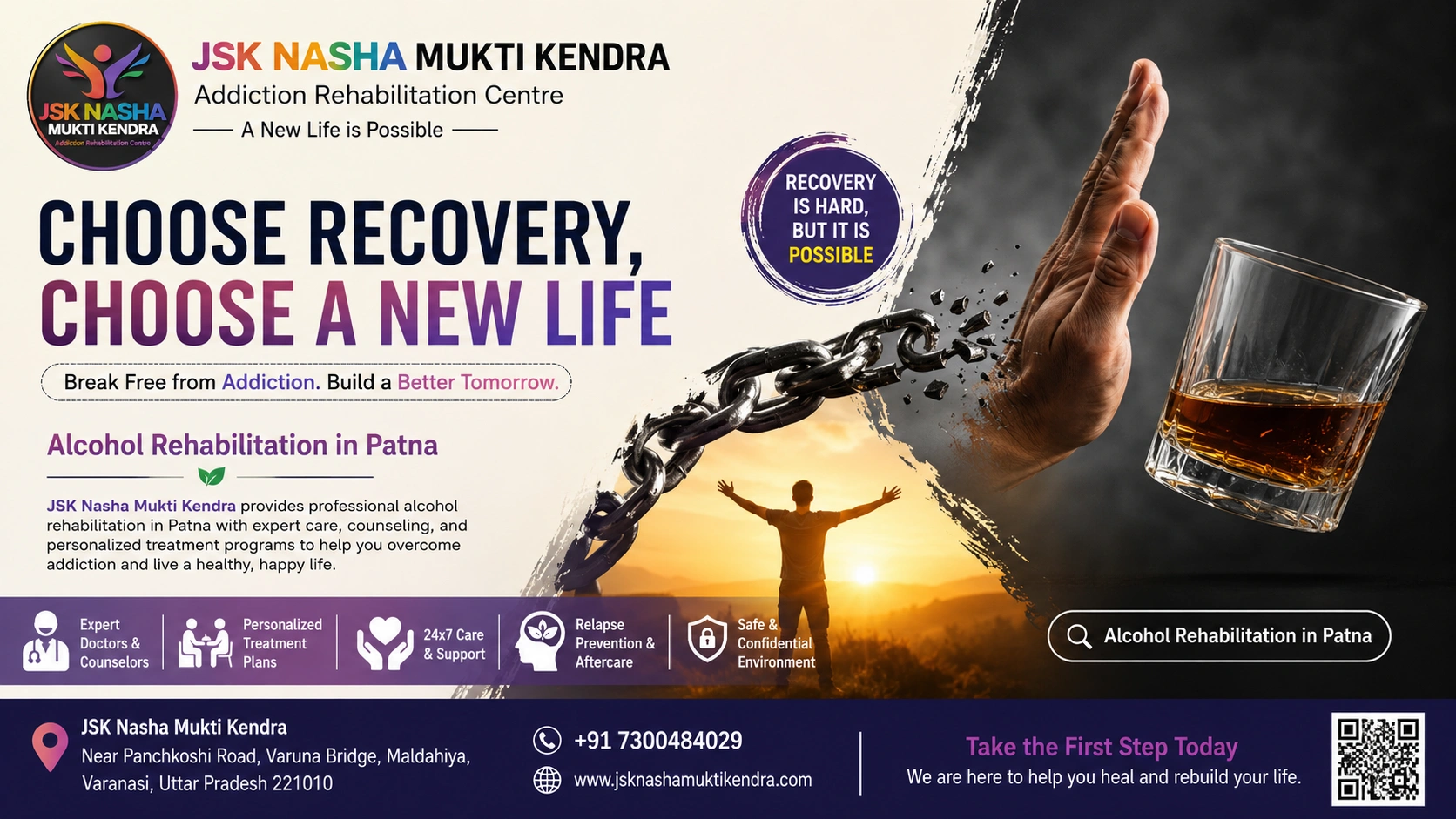
Jan Samaj Kalyan Nasha Mukti Kendra focuses on building a structured environment where people can work toward recovery with proper guidance and steady support the whole way through.
When Families Should Take the First Step
A lot of families wait for their loved one to “realise the problem” before doing anything at all. Motivation counts for something, sure. But getting a professional opinion early usually brings a lot more clarity, and it narrows down which options actually make sense instead of guessing in the dark.
If alcohol is affecting someone’s health, relationships, work, money, or just everyday life, getting an assessment is a reasonable place to start. This was never about shaming anyone. It’s about understanding what’s actually happening and building a path forward that’s realistic, not wishful.
For general, reliable information on alcohol related health risks, the World Health Organization’s resource on alcohol is worth a look: World Health Organization, Alcohol Fact Sheet.
Conclusion
Finding the right alcohol rehabilitation in Patna isn’t something you rush, and honestly, it shouldn’t be. Treatment quality, professional guidance, individual needs, family involvement, long-term aftercare, all of it plays a part. Recovery was never just about staying off alcohol for a few weeks and moving on. It’s about routines that actually hold up, understanding your own triggers, coping skills that work when it counts, and a support system that doesn’t vanish once the hardest part is over.
If you’re exploring professional help, take the time to understand the programme properly, ask whatever questions matter to you, and choose support that treats people with dignity instead of judgement. For anyone searching for a Nasha mukti kendra Patna, that first step toward professional guidance is often where real recovery quietly begins.
Frequently Asked Questions
1. What is alcohol rehabilitation in Patna?
It’s a structured recovery programme, usually covering assessment, withdrawal support where it’s needed, counselling, behavioural guidance, family support, relapse prevention planning, and aftercare.
2. How long does alcohol rehabilitation take?
Honestly, it depends. Drinking history, current health, withdrawal risk, how someone’s progressing, individual needs, they all factor in. A professional assessment is really the only way to get a timeline that means anything.
3. Is alcohol withdrawal dangerous?
It can be, particularly for someone with a long or heavy drinking history. Symptoms range from mild discomfort to serious complications, which is exactly why medical guidance matters when stopping alcohol after significant dependence.
4. What happens during alcohol addiction treatment?
It can involve assessment, counselling, structured daily activities, behavioural support, health monitoring, family guidance, and relapse prevention strategies. The exact plan shifts depending on what the person actually needs.
5. Can counselling help with alcohol addiction?
Yes, genuinely. Counselling helps people understand their drinking triggers, manage cravings, build coping strategies that hold up, improve emotional regulation, and get ready for the situations most likely to push them toward relapse.