
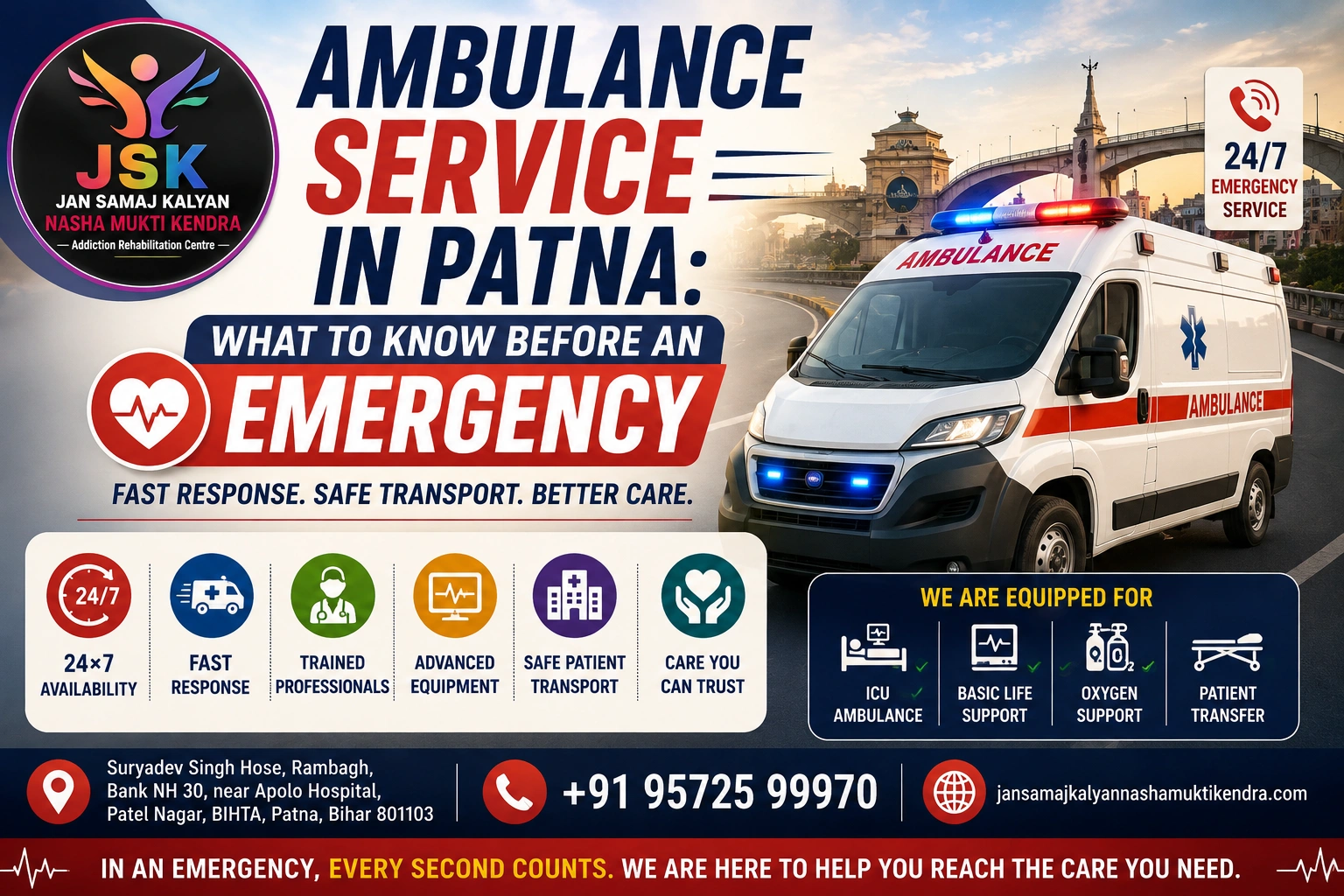
Nobody ever plans for a medical emergency. That’s kind of the whole problem with them. One moment everything is normal, and the next you’re standing there trying to figure out what to do while your hands shake and your mind goes blank. How you respond in those first few minutes can genuinely shape how well a patient recovers. This is exactly why having a dependable ambulance service in Patna on your radar, before you ever need one, makes such a difference.
Why Ambulance Service in Patna Matters During Emergencies
An ambulance is not just a vehicle that carries someone from point A to point B. Not the good ones, anyway. Depending on what you book, it can come with trained staff, monitoring equipment, and basic medical care happening right there in the vehicle, long before you even reach a hospital door.
Picture a road accident, sudden chest pain, someone struggling to breathe, a seizure, or a patient who just isn’t responding anymore. These are the moments that need urgent care, and they need it fast. The World Health Organization has noted that prehospital emergency care, meaning quick assessment, immediate treatment, and safe transport to the right facility, genuinely improves how patients recover. So when someone types “emergency ambulance in Patna” into their phone at 2 a.m., what they’re really searching for is that bridge between crisis and hospital bed. And that bridge matters more than most people realize until they actually need it.
When Should You Consider Emergency Ambulance Transport?
A lot of families hold back before calling for an ambulance. They tell themselves it might not be that serious, or that they can just drive there faster themselves. Sometimes that’s true. Often it isn’t. If someone looks critically unwell, has a major injury, or simply cannot be moved safely in a regular car, you already have your answer. Reaching out for a proper ambulance booking in Patna at that point is almost always the safer route, even if it feels like overreacting at the moment.
Common Situations Requiring Urgent Transport
A few situations where urgent transport usually makes sense:
- Serious road or workplace accidents
- Difficulty breathing
- Suspected heart attack or stroke
- Loss of consciousness
- Severe bleeding
- Serious burns or injuries
- Seizures that need urgent evaluation
- Sudden decline in a critically ill patient
- Certain poisoning or overdose cases
- Monitored transfers between hospitals
If you see any of these signs and they look serious, please do not sit there scrolling for answers online. Call for help. Right now.
Understanding Different Types of Ambulance Services
Here’s something people don’t always realize: not every patient needs the same kind of ride. What works perfectly for one case might be completely wrong for another, so the right vehicle really comes down to the patient’s actual condition, not just what’s available first.
Basic Ambulance Services
Basic ambulances tend to work well for patients who mostly need safe, comfortable transport with a bit of basic support along the way. They’re often a fine choice for non-critical transfers, though this still depends on the patient and what a particular provider can actually offer.
Advanced or Critical-Care Transport
Some patients need much closer monitoring or more advanced equipment while they’re on the move. For someone in a critical state, that usually means specialized machines and staff trained to handle complications mid-transit, not after arrival. This is where an ICU ambulance service in Patna really earns its keep, since it’s built specifically for these high-risk transfers.
Either way, it genuinely helps to describe the patient’s condition clearly when you call. That way the provider sends the right level of support instead of guessing and hoping for the best.
Patient Transfer Between Hospitals
Sometimes a patient has to move from one hospital to another, whether that’s for a specialist’s opinion, a diagnostic test, surgery, ICU care, or continued monitoring. A well-planned transfer needs real coordination between both facilities, not just a phone call and a vehicle. WHO’s guidance on this points to communication, medical oversight, proper equipment, clear clinical protocols, and a smooth handover as the pieces that actually make a transfer safe.
What Information Should You Give When Booking an Ambulance?
During an emergency, giving accurate details right away helps the ambulance crew get ready before they’ve even pulled up to your door.
Patient’s Current Condition
Let them know if the patient is conscious, breathing normally, in severe pain, bleeding, having a seizure, or showing any other symptom that worries you.
Exact Pickup Location
Give the complete address plus a nearby landmark, building name, or floor number, basically anything that helps the crew find you without wasting time.
Destination Hospital
If you already have a hospital picked out, share its name and location. For hospital-to-hospital transfers, pass along whatever details the treating team gave you about the receiving facility.
Special Requirements
Mention if the patient needs oxygen, ongoing monitoring, wheelchair support, or a stretcher, if you happen to know beforehand.
Try not to get pulled into extra details that eat up precious minutes. What matters most is the patient’s condition, the exact location, and where they need to end up.
Features to Look for in a Reliable Ambulance Service in Patna
Choosing a provider shouldn’t just come down to whichever one is cheapest. In a real emergency, safety, speed, communication, and the right equipment matter a lot more than saving a few rupees.
Availability and Response
A trustworthy service should have a clear, no-fuss process for taking emergency calls and getting a suitable vehicle on the road without delay.
Trained Personnel
How much staff support you actually need depends on the patient’s condition and the type of ambulance being sent. It’s completely fair to ask upfront whether trained medical personnel will be riding along if the situation calls for it.
Appropriate Equipment
Different cases call for different equipment. A good ambulance should be carrying whatever the level of care demands, nothing less and no shortcuts.
Clean and Maintained Vehicle
A well-kept, hygienic ambulance simply makes for a safer ride. Proper infection control matters even more when the patient is already fragile.
24×7 Ambulance Availability for Unexpected Situations
Emergencies don’t check a clock before they happen. They show up at 3 a.m., on a Sunday, or right in the middle of a festival when everyone else has gone home. That’s exactly why round-the-clock coverage matters so much for families who might need help outside regular hours.
When you’re comparing options for a 24×7 ambulance service in Patna, ask about their response process, the range of ambulances on offer, what medical support is on board, which areas they actually cover, and how fast you can get one booked.
That said, being available all day doesn’t guarantee a lightning-fast arrival every single time. Traffic, distance, road conditions, weather, and how many other calls are coming in at once can all affect how quickly help reaches you.
Ambulance Support for Addiction and Rehabilitation Patients
Emergency transport isn’t only about accidents or sudden illness. It matters during addiction recovery too, more than people tend to assume. Individuals going through rehabilitation sometimes face medical complications or other health issues that need a hospital visit without delay.
For someone receiving care at a Nasha Mukti Kendra Patna, having safe, quick transportation available can make a real difference when urgent medical evaluation becomes necessary.
Families should never try to physically manage a seriously unwell or unconscious patient by themselves. If something goes wrong, get qualified medical help right away.
How Families Can Prepare Before an Emergency
A little preparation really does go a long way once panic sets in.
Keep this information handy and easy to grab:
- Important family contact numbers
- The patient’s basic medical history
- Current medicines being taken
- Known allergies
- Existing medical conditions
- Preferred hospital details
- Emergency contact numbers
- ID proof and relevant medical documents
It also helps to have a rough idea of where the nearest hospitals are, and to decide beforehand who in the family will actually talk to doctors and the ambulance crew when the moment comes.
Stay Calm and Communicate Clearly
Panic makes it hard to explain anything clearly, and that’s completely understandable, but it doesn’t help at the moment. Try to slow your breathing, answer the dispatcher’s questions directly, and follow whatever instructions the medical staff give you.
Don’t waste precious minutes hunting for the “perfect” option. In a genuine emergency, getting qualified help quickly matters far more than comparing every single provider in town.
How to Choose the Best Ambulance Service for Your Needs
Before settling on a provider, think about whether they actually offer the right type of ambulance for the patient’s condition, proper medical support, clear communication, and dependable availability.
For planned or routine transfers, sure, take your time and compare a few services in advance. But if it’s a life-threatening emergency happening right now, focus on getting help fast instead of shopping around for the best deal.
WHO‘s 2025 operational guidance for ambulance systems covers emergency communication and dispatch, medical control, equipment standards, infection prevention, clinical protocols, and patient handover. It’s a good reminder that a proper ambulance system is about a lot more than just a vehicle showing up outside your gate.
Conclusion
Knowing what to expect from a good ambulance service in Patna can genuinely help families make better decisions when everything feels chaotic. Whether it’s urgent evaluation, a hospital transfer, or specialized medical transport, the right service can make all the difference in those critical early moments, the ones that matter most.
The best choice really depends on the patient’s condition, the level of medical support needed, distance, destination, and how quickly the provider can respond. Keep emergency information ready, stay as calm as you can, communicate clearly, and never hesitate to seek professional help when something feels serious. It’s always better to call and not need it than to wait and wish you had.
For families connected with rehabilitation services, reliable emergency transport also creates an important link between a recovery centre and hospital care whenever urgent attention becomes necessary.
FAQs
1. What is Ambulance Service in Patna?
It refers to emergency and medical transportation that safely moves patients between homes, accident sites, clinics, and hospitals based on their specific medical and transport needs.
2. When should I call an ambulance?
Call one when someone has a serious injury, trouble breathing, loses consciousness, is bleeding heavily, or shows signs of a stroke or heart attack, or really any condition that needs urgent medical attention.
3. What information is needed to book an ambulance?
Generally, you’ll want to share the patient’s condition, the exact pickup location, contact details, the destination hospital, and any special medical or transport requirements you’re already aware of.
4. Are ambulance services available 24 hours?
Many providers do run round-the-clock. Still, it’s worth double-checking current availability and the type of ambulance support a specific provider actually offers before you count on them.
5. Can an ambulance transfer a patient between hospitals?
Yes. Medical ambulances are commonly used for inter-hospital transfers when a patient needs specialist treatment, diagnostic tests, or continued monitoring at another facility.