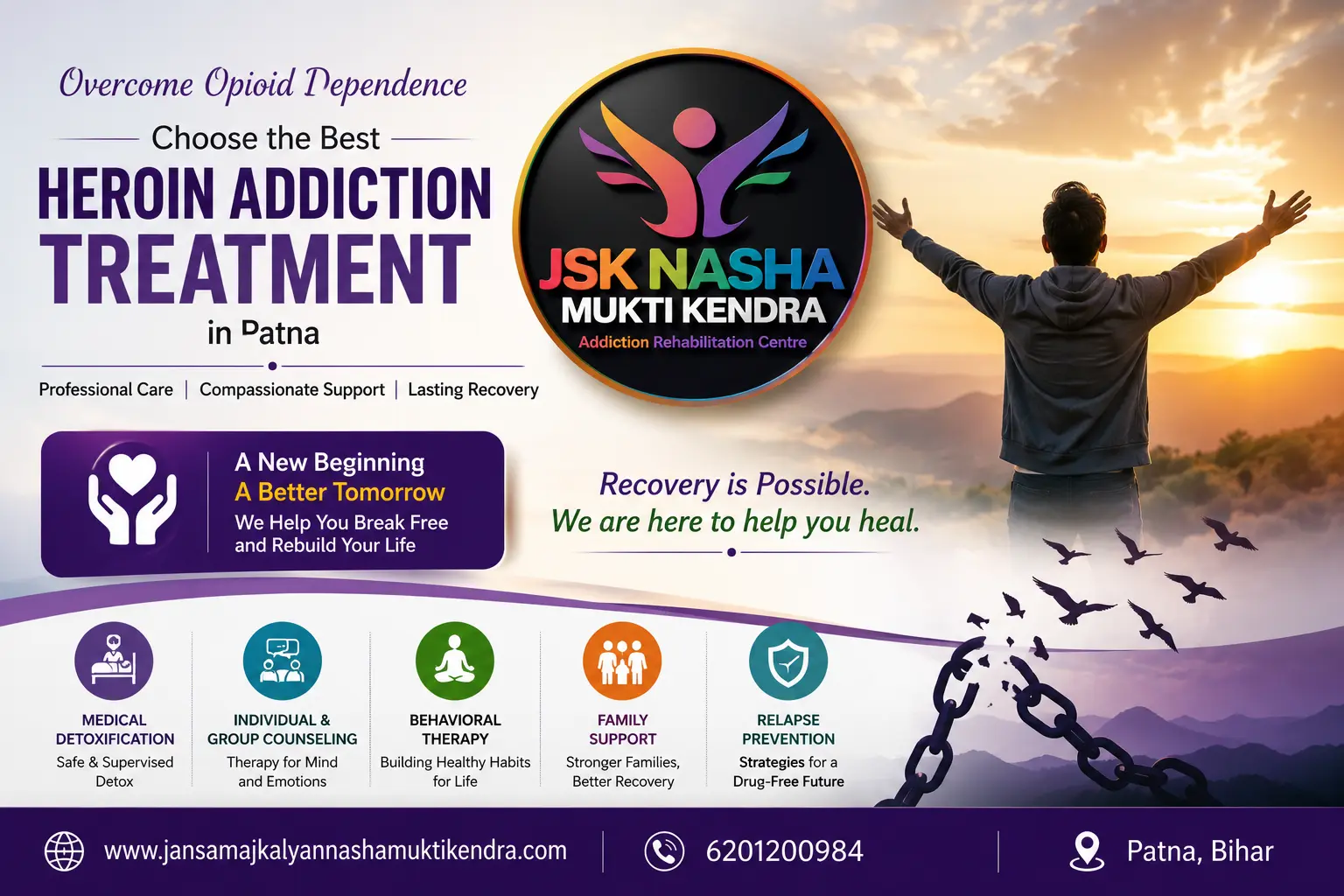
I’ve sat across the table from a lot of families over the years, and there’s a moment that repeats itself almost every time, the moment they realize this isn’t a “phase” anymore. Heroin addiction has a way of quietly taking over everything: sleep, appetite, relationships, work, money, self-respect. By the time most families come looking for the best heroin addiction treatment in Patna, they’re usually exhausted, scared, and not sure who to trust anymore. That’s completely understandable. What I always tell them is this, recovery isn’t about willpower or promises made in a moment of guilt. It’s about proper medical care, honest conversations, and a plan that’s built around the actual person, not a generic checklist. Get that right, and people really do come back from this.
Understanding Heroin Addiction Before You Can Beat It
Heroin is an opioid, and it works fast, it hits the brain’s reward system almost the moment it enters the body, which is part of what makes it so dangerous. Some people start out of pure curiosity. Others get pulled in through friends, a rough patch in life, or, and this happens more often than people assume, misusing a painkiller that was prescribed for something completely unrelated, like a back injury or a surgery. It rarely starts with an intention to get addicted. It just happens, one dose at a time, until the brain itself changes shape around the drug.
And once that happens, stopping isn’t a matter of “just deciding to.” I’ve had patients tell me they know exactly what heroin is doing to their body, their marriage, their bank account, and they still can’t put it down. That’s not a weakness. That’s what addiction actually does to the brain’s chemistry. It rewires how a person feels pleasure, handles stress, and even processes pain. Which is exactly why we need to treat this like the medical condition it is, instead of quietly judging someone for “not trying hard enough.”
Why Choosing the Right Opioid Addiction Treatment in Patna Really Matters
Here’s something people don’t always expect going in: recovery is rarely a straight line, and it’s almost never just about getting through detox. A good heroin de-addiction program in Patna looks at the whole person, the body that needs healing, the mind that needs steadying, and the specific triggers and habits that led someone here in the first place.
That’s really the heart of it. Two people can walk in with the exact same drug of choice and completely different reasons for using it, one might be running from grief, another from untreated anxiety, another from years of family conflict nobody ever addressed. Treat them all the same way, and you’re setting at least one of them up to relapse. Individualized care isn’t a nice add-on; it’s what actually separates a short-lived detox from a recovery that holds up over years.
Common Signs of Heroin Dependence You Shouldn’t Ignore
Families often tell me, looking back, that the signs were there for months before anyone said anything out loud. Here’s what to watch for.
Intense, Uncontrollable Cravings
This is usually one of the earliest tells. The craving stops being background noise and starts running the show, work gets skipped, relationships get neglected, and everything else takes a back seat to getting the next dose.
Rising Drug Tolerance
Over time, the same amount just doesn’t do what it used to. So the person uses more. And more. This is where things get genuinely dangerous, because a higher tolerance also means a much thinner margin before an accidental overdose.
Withdrawal Symptoms That Keep People Trapped
Cut back or stop, and withdrawal can set in within a matter of hours. It’s brutal.
Some of the more common symptoms include:
- Severe body aches and muscle cramps
- Heavy sweating and chills
- Anxiety, restlessness, and insomnia
- Nausea, vomiting, and diarrhea
- Cravings so strong they override everything else
Honestly, this is the part most people underestimate. The withdrawal itself feels so unbearable that a lot of people go straight back to using just to make it stop, which is exactly why detox needs to happen under proper medical supervision, not alone at home.
Visible Changes in Behavior and Health
More often than not, it’s the family who notices first, sudden weight loss, slipping hygiene, mood swings that come out of nowhere, a general loss of motivation, money quietly disappearing, pulling away from people who used to matter, and grades or work performance sliding downhill.
How the Best Heroin Addiction Treatment in Patna Actually Works
There’s no single “fix” here, real recovery moves through stages, each one setting up the next.
Comprehensive Medical and Psychological Assessment
Everything starts with a proper evaluation, physical health, history with the drug, mental state, and what the person actually wants their life to look like on the other side of this. This assessment isn’t a formality; it shapes every decision that follows.
Medically Supervised Detoxification
Detox is usually the hardest part, at least physically. Because heroin withdrawal can hit the body so hard, it needs to happen under trained medical eyes, with symptoms tracked closely and managed with appropriate support when needed. Done right, it’s a lot safer and a lot more bearable than trying to grit it out alone.
One on One Counseling for Lasting Change
This is where the real work often begins. Counseling digs into the “why” behind the addiction, stress that’s gone unmanaged for years, depression, trauma nobody’s ever talked about, peer pressure, family conflict that keeps repeating itself. Understanding why someone turned to heroin in the first place matters just as much as treating the addiction itself, because that’s where the healthier coping habits eventually come from.
Behavioral Therapy to Reshape Daily Habits
Behavioral therapy is about swapping out the old, harmful patterns for new ones that actually hold up under pressure. Over time, patients learn how to sit with a craving instead of acting on it, manage their emotions without a substance to lean on, and get through a bad day without it turning into a relapse.
Group Therapy for Shared Strength
There’s something genuinely powerful about sitting in a room with people who just get it, no explaining required. Group therapy builds accountability in a way that individual sessions sometimes can’t, and it reminds people, often for the first time in a while, that they’re not the only ones fighting this battle.
Family Counseling to Rebuild What Addiction Broke
Addiction does not only impact one person in a home but impacts the family as well, typically through fear, secrets, and a lack of trust. Family counseling can help everyone get back on track towards honest conversation and provides tools for maintaining support after formal treatment has concluded.
Lifestyle Habits That Strengthen Long-Term Sobriety
Detox and therapy do the heavy lifting, but it’s the small daily habits that keep recovery standing upright.
The things that genuinely seem to help, based on what I’ve seen work:
- Eating regular, balanced meals instead of skipping them
- Getting the body moving, even a daily walk counts
- Sticking to a consistent sleep schedule
- Trying yoga or meditation, even just ten minutes a day
- Learning practical ways to handle stress before it builds up
- Picking up a hobby that actually feels rewarding
- Spending time with people who support the sober version of you
None of these are dramatic on their own. But stacked together, day after day, they build the kind of resilience that makes relapse a lot less likely.
Preventing Relapse: What Comes After Treatment
Here’s the honest truth nobody likes hearing at the start: treatment ending isn’t the finish line. Recovery is something you keep showing up for.
Learning to Recognize Personal Triggers
Everyone’s triggers look a little different, a certain street, a particular friend, a stressful phone call, even a specific time of year. Learning to spot these early, before they spiral, is one of the most practical skills anyone in recovery can build.
Leaning on a Real Support System
Family, close friends, counselors, recovery groups, these relationships matter more than most people expect going in. Having someone to call at 2 a.m. on a hard night can genuinely be the difference between a slip and a full relapse.
Staying Connected Through Follow-Up Care
Regular check-ins with addiction specialists help catch trouble before it becomes a crisis, and honestly, they keep people accountable in a way that’s hard to replicate on your own. This is often the quiet, unglamorous part of recovery, but it’s usually what separates people who stay sober for a few months from people who stay sober for good.
Choosing the Right Nasha Mukti Kendra in Patna
This decision matters more than most families realize going in, so it’s worth taking your time over it. Look for a centre that actually builds a personalized plan rather than running everyone through the same routine, has qualified addiction specialists on staff, offers medically supervised detox, and combines individual counseling, group therapy, and family involvement with a real relapse-prevention plan, all inside an environment that feels safe and confidential, not clinical and cold.
If you’re looking for a trusted Nasha mukti kendra Patna for heroin recovery, Jan Samaj Kalyan Nasha Mukti Kendra brings together experienced professionals who genuinely care about getting each person through this, from that very first assessment all the way through long-term follow-up. Taking that first step is hard, I won’t pretend otherwise, but it’s also usually the moment everything starts to turn around.
Before starting treatment, it helps to know what the wider medical community actually recommends, rather than relying on guesswork or old advice. The World Health Organization has continued updating its guidance on opioid dependence, and its evidence-based recommendations consistently point toward combining medical care, counseling, and structured psychosocial support for better long-term outcomes, you can read more on the World Health Organization’s official website. It’s worth a read if you’re trying to make an informed decision for yourself or someone you love.
Conclusion
Heroin addiction can quietly take over a person’s entire life, but recovery genuinely is possible, with the right timing, the right people, and the willingness to keep showing up even on the hard days. The best heroin addiction treatment in Patna brings together medical detox, behavioral therapy, individual and family counseling, and steady aftercare, addressing both the physical grip of the drug and the reasons someone reached for it in the first place. At Jan Samaj Kalyan Nasha Mukti Kendra, that journey usually starts with one honest conversation, and it’s never too late to have it.
Frequently Asked Questions
1. How long does heroin addiction treatment usually take?
It really depends on the person, detox alone might take a couple of weeks, but a full program with counseling and aftercare often runs several months.
2. Is heroin detox safe to do at home?
No, and I’d strongly caution against it. Withdrawal can get physically and psychologically intense fast, and without medical supervision, it can actually be dangerous. A supervised setting is always the safer choice.
3. What is the first step in heroin addiction treatment?
Usually it’s a full medical and psychological assessment, followed by supervised detox to manage withdrawal safely before any deeper therapy begins.
4. Can heroin addiction be treated without therapy?
Detox handles the physical side, but without counseling and behavioral therapy, the underlying triggers stay untouched, and that’s usually where relapse comes from.
5. How can family members help someone struggling with heroin addiction?
Honestly, just showing up matters, attending family counseling, staying patient, keeping communication open, and gently but firmly encouraging professional treatment.