Drug addiction is becoming a serious problem in many families across India. Teenagers, working professionals, and even students are getting trapped in substance abuse. Many people start using drugs casually, but over time, it slowly turns into dependency and addiction.
Understanding the stages of drug addiction helps people identify early warning signs before the condition becomes dangerous. Early treatment can save relationships, careers, health, and lives.
According to reports by the Government of India, millions of people struggle with substance abuse every year. Sadly, many families still avoid discussing addiction openly. This lack of awareness delays proper treatment and emotional support.
Organisations like Jan Samaj Kalyan Nasha Mukti Kendra work continuously to spread awareness and support individuals through professional recovery programs.
What is Drug Addiction?
Drug addiction is a condition where a person loses control over the use of harmful substances. The body and brain start depending on drugs to feel normal or emotionally stable.
In simple words, drug addiction meaning in Hindi is “नशे की ऐसी आदत जो व्यक्ति के शरीर और दिमाग दोनों पर नियंत्रण कर लेती है।”
Addiction does not happen overnight. It develops slowly through different emotional, mental, and physical stages. What starts as experimentation can eventually become a severe health problem.
Why Drug Addiction is Increasing in India
The problem of drug addiction in India has grown rapidly in recent years. Stressful lifestyles, unemployment, depression, and peer pressure are major reasons behind this increase.
Young people often try substances out of curiosity or social influence. Many believe they can stop anytime. However, repeated use changes brain behaviour and creates dependency.
Common causes of addiction include:
- Peer pressure
- Anxiety and depression
- Family conflict
- Academic stress
- Emotional trauma
- Lack of awareness
- Easy availability of drugs
Rural and urban areas both face this issue today. That is why drug addiction awareness has become extremely important for families and communities.
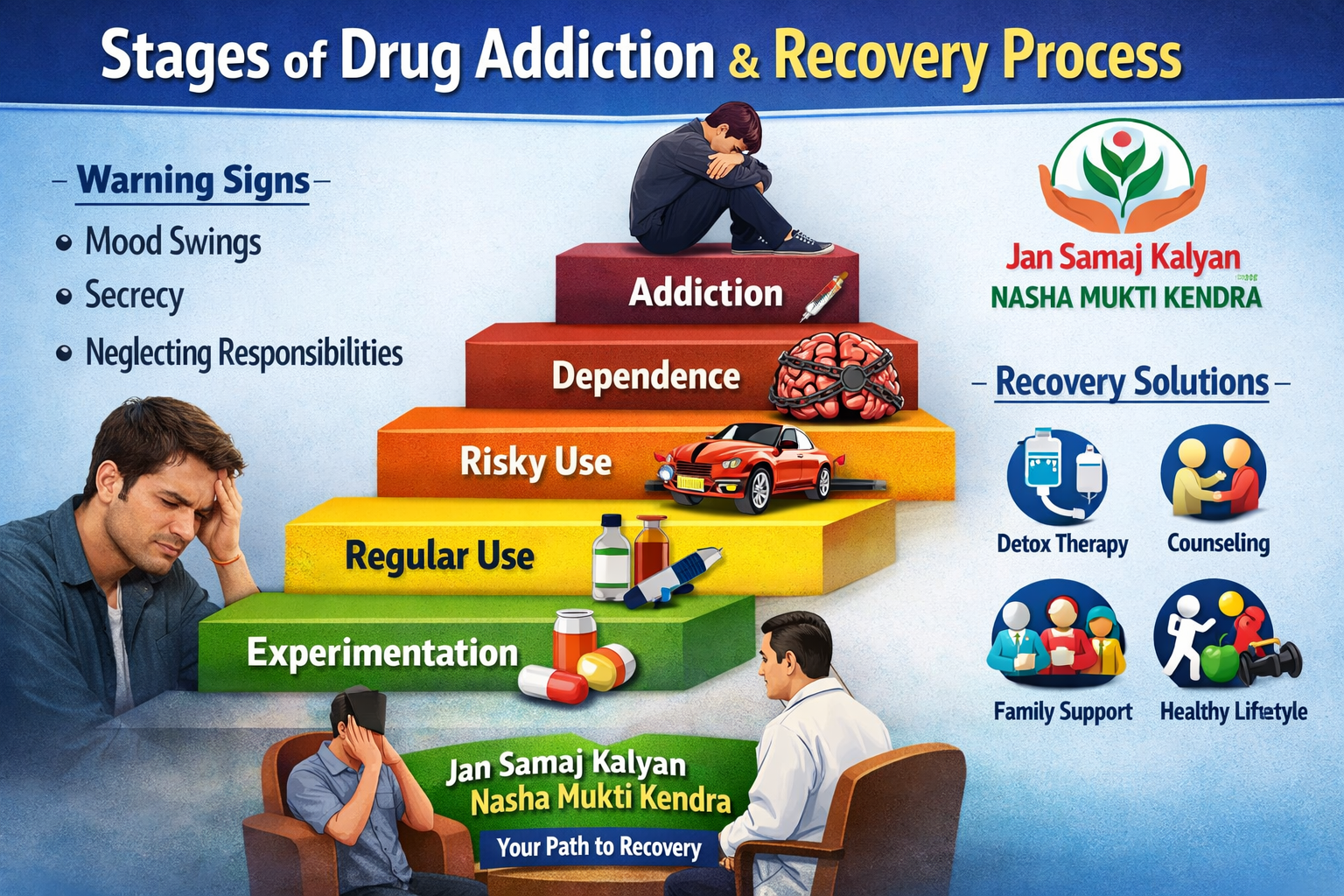
What Are the Stages of Drug Addiction?
Understanding the stages helps families recognize the condition early. Every person may experience addiction differently, but the progression usually follows a similar pattern.
Stage 1: Experimentation
This is the beginning stage where a person tries drugs casually. Many people experiment due to curiosity, social gatherings, or pressure from friends.
At this point, the person usually believes drug use is harmless. They may use substances occasionally without noticing any serious consequences.
Signs of Experimentation
- Trying drugs at parties
- Sudden change in friend circle
- Hiding activities from family
- Mood swings
- Increased secrecy
This stage may seem harmless, but repeated use increases the risk of dependency.
Stage 2: Regular Use
In this stage, drug use becomes more frequent. The person starts using substances regularly during stress, loneliness, or emotional discomfort.
Daily routines slowly begin to change. Work performance, studies, and family relationships may start getting affected.
Signs of Regular Drug Use
- Missing responsibilities
- Sleeping problems
- Irritation and anger
- Reduced interest in hobbies
- Increased spending on substances
Family members often notice behavioral changes during this stage.
Stage 3: Risky Use
Risky use begins when a person continues consuming drugs despite negative consequences. Health problems, emotional instability, and social conflicts become more visible.
People in this stage may take dangerous decisions while under the influence of drugs.
Common Problems During Risky Use
- Driving under intoxication
- Aggressive behavior
- Financial difficulties
- Relationship breakdowns
- Poor academic or job performance
This stage usually creates emotional pain for both the individual and family members.
Stage 4: Dependence
Dependence develops when the body starts needing drugs to function normally. Without substances, the person experiences withdrawal symptoms.
Tolerance also increases during this stage. This means the person needs larger amounts of drugs to achieve the same effect.
Withdrawal Symptoms
- Anxiety
- Sweating
- Headaches
- Nausea
- Shaking
- Depression
- Insomnia
Physical and emotional dependence makes quitting extremely difficult without professional support.
Stage 5: Addiction
This is the most severe stage of addiction. The person completely loses control over drug use even after understanding its harmful effects.
Drug addiction affects physical health, mental health, finances, relationships, and social life.
Serious Signs of Addiction
- Drug cravings throughout the day
- Isolation from loved ones
- Severe mood disorders
- Loss of employment
- Criminal activities for money
- Physical health deterioration
At this stage, professional rehabilitation becomes necessary for recovery.
What Happens to the Brain During Addiction?
Drugs affect the brain’s reward system. Harmful substances release dopamine, a chemical linked to pleasure and motivation.
Over time, the brain stops producing normal levels of dopamine naturally. As a result, the person depends on drugs to feel happiness or emotional balance.
This is why addiction becomes both a mental and physical condition.
Signs of Drug Addiction You Should Never Ignore
Recognizing early symptoms can help prevent severe addiction. Many families ignore warning signs until the condition becomes dangerous.
Physical Signs
- Red eyes
- Weight loss
- Poor hygiene
- Frequent illness
- Slurred speech
Emotional Signs
- Depression
- Anxiety
- Mood swings
- Irritability
- Lack of motivation
Behavioural Signs
- Lying frequently
- Social withdrawal
- Secretive behavior
- Sudden anger
- Financial problems
If these symptoms continue for weeks, professional evaluation is important.
Effects of Drug Addiction on Health and Family
Drug addiction damages almost every part of life. It affects emotional health, family stability, and long-term physical wellness.
Health Effects
- Liver disease
- Heart problems
- Memory loss
- Anxiety disorders
- Depression
- Weak immune system
Family Effects
- Frequent arguments
- Loss of trust
- Emotional trauma
- Financial stress
- Social isolation
Children in addicted households often suffer emotionally and academically.
Why Drug Addiction Awareness Matters
Many people still treat addiction as a moral weakness instead of a medical condition. This misunderstanding prevents people from seeking help.
Better drug addiction awareness can:
- Encourage early treatment
- Reduce social stigma
- Support families emotionally
- Prevent substance abuse among youth
- Improve recovery success rates
Awareness programs in schools and communities can play a major role in prevention.
How Drug Addiction is Diagnosed
Doctors and rehabilitation experts use medical and psychological evaluations to diagnose addiction.
The diagnosis process usually includes:
- Behavioral assessment
- Mental health screening
- Physical examination
- Substance use history
- Family counseling sessions
Early diagnosis increases the chances of successful recovery.
How Professional Treatment Helps
Professional treatment focuses on both physical recovery and emotional healing. Recovery programs are designed according to the severity of addiction.
Centres like Jan Samaj Kalyan Nasha Mukti Kendra provide structured support, counseling, and rehabilitation services to help individuals rebuild healthy lives.
What is Detoxification?
Detoxification is the first step in recovery. During detox, harmful substances are removed from the body under medical supervision.
This stage helps manage withdrawal symptoms safely and prepares the patient for further treatment.
Detox alone is not enough. Long-term therapy and emotional support are equally important.
How Counseling Supports Recovery
Counseling helps patients understand the emotional causes behind addiction. Therapy sessions improve confidence, communication, and mental stability.
Benefits of Counseling
- Better emotional control
- Reduced relapse risk
- Improved self-esteem
- Stronger family relationships
- Stress management skills
Family counseling also helps loved ones heal emotionally.
Why Family Support is Important
Addiction affects the entire family, not just the individual. Emotional support from loved ones improves recovery outcomes significantly.
Families should avoid blame and focus on encouragement instead.
Helpful Family Support Tips
- Communicate calmly
- Avoid judgment
- Encourage treatment
- Attend counseling sessions
- Celebrate small recovery milestones
Positive support creates motivation during difficult recovery periods.
How to Prevent Drug Addiction
Prevention is always better than treatment. Families, schools, and communities all play an important role in reducing addiction risks.
Prevention Tips
- Educate children early
- Encourage healthy friendships
- Discuss mental health openly
- Avoid substance-friendly environments
- Seek emotional support during stress
Awareness and communication can prevent many addiction cases before they begin.
When Should You Seek Professional Help?
Many families wait too long before contacting rehabilitation centers. Delayed treatment increases physical and emotional damage.
Seek professional help if you notice:
- Daily drug use
- Violent behavior
- Severe mood swings
- Withdrawal symptoms
- Social isolation
- Financial instability
Early treatment improves long-term recovery success.
Benefits of Professional Rehabilitation Centres
Professional rehabilitation centres provide structured recovery programs in a safe environment.
Key Benefits
- Medical supervision
- Emotional counseling
- Group therapy
- Relapse prevention planning
- Family support sessions
- Healthy daily routines
Recovery becomes easier when patients receive continuous emotional and professional care.
Conclusion
The stages of drug addiction show how casual substance use can slowly become a serious medical condition. Early signs should never be ignored because addiction affects health, emotions, relationships, and future stability.
With proper awareness, emotional support, and professional treatment, recovery is possible. Families should encourage open conversations instead of hiding the problem due to fear or social pressure.
Organisations like Jan Samaj Kalyan Nasha Mukti Kendra continue helping individuals move toward healthier and addiction-free lives through proper care and rehabilitation support.
Frequently Asked Questions (FAQ)
What are the stages of drug addiction?
The stages usually include experimentation, regular use, risky use, dependence, and addiction. Each stage gradually increases physical and mental dependency on substances.
What is drug addiction meaning in Hindi?
Drug addiction meaning in Hindi is “नशे की ऐसी लत जो व्यक्ति के शरीर और दिमाग को नियंत्रित करने लगती है।”
What are the early signs of drug addiction?
Common early signs include mood swings, secrecy, social withdrawal, poor performance, sleeping issues, and sudden behavioral changes.
Why is drug addiction increasing in India?
Stress, unemployment, peer pressure, emotional trauma, and lack of awareness are major reasons behind rising drug addiction in India.
Can drug addiction be treated successfully?
Yes. With detox, counseling, therapy, family support, and professional rehabilitation programs, many people recover successfully from addiction.
Why is drug addiction awareness important?
Awareness helps people identify warning signs early, reduce stigma, encourage treatment, and prevent substance abuse among young individuals.
When should someone visit a Nasha Mukti Kendra?
Professional help should be considered when drug use becomes regular, uncontrollable, or starts affecting health, relationships, finances, or daily life.