Introduction
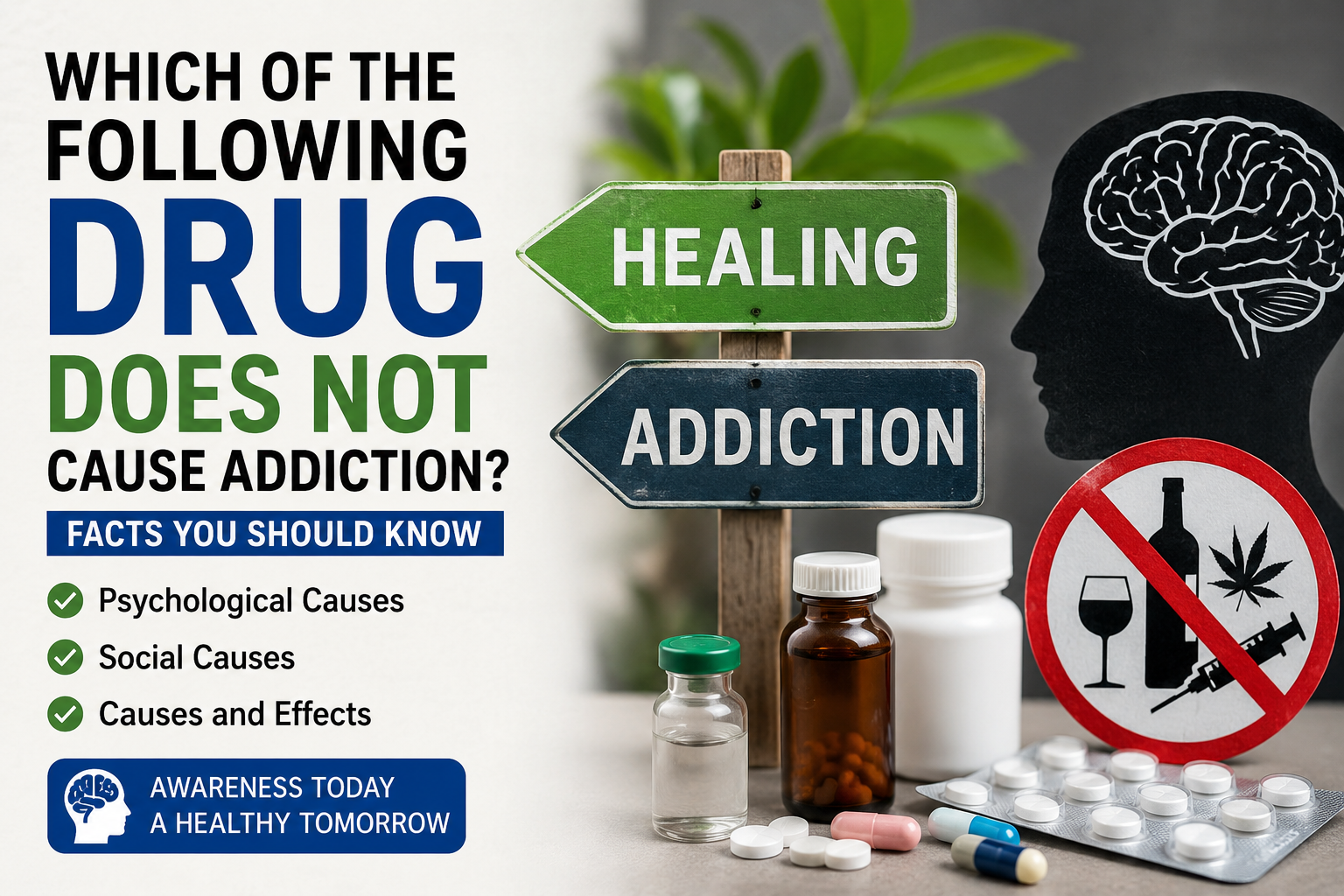
Many people search online for the answer to “which of the following drug does not cause addiction?” This question often appears in competitive exams, health awareness programmes, and general discussions about medicines and substance abuse. However, the answer is not always simple because different drugs affect the body and brain in different ways.
Some medicines are designed to treat illnesses and have little or no risk of addiction when they are used correctly. On the other hand, certain drugs can create dependence, cravings, and withdrawal symptoms, making them highly addictive if they are misused.
Understanding the difference between addictive and non-addictive drugs is important for students, parents, healthcare professionals, and the general public. It also helps people make informed decisions about medicine use and recognise the early warning signs of substance abuse.
In this guide, you will learn which drugs generally do not cause addiction, the psychological causes of drug addiction, the social causes of drug addiction, the causes and effects of drug addiction, and practical ways to prevent addiction and support recovery.
What Is Drug Addiction?
Drug addiction is a chronic condition in which a person continues to use a substance even after it starts causing harm to their health, relationships, education, or career. Over time, the brain becomes dependent on the substance, making it difficult to stop using it without professional help.
Addiction changes the brain’s reward system. The person begins to crave the drug and may need higher doses to experience the same effect. This process is known as tolerance.
Without treatment, addiction can affect every part of life, including physical health, mental well-being, family relationships, and financial stability.
Which of the Following Drug Does Not Cause Addiction?
The correct answer depends on the options given in the question. However, many medicines used in healthcare do not cause addiction when taken according to a doctor’s advice.
Examples include:
- Antibiotics used to treat bacterial infections
- Vaccines that protect against diseases
- Insulin used for diabetes management
- Blood pressure medicines
- Thyroid hormone replacement medicines
- Many non-sedating allergy medications
- Vitamins and mineral supplements
These medicines perform specific medical functions and do not generally stimulate the brain’s reward system in the way addictive substances do.
However, this does not mean they should be taken without medical supervision. Every medicine has its own dosage and possible side effects.
Does Every Drug Have the Potential to Cause Addiction?
No. Many medicines are completely safe when used correctly.
However, some prescription medicines can become addictive if they are taken for longer than recommended or used without medical advice.
Examples include:
- Opioid painkillers
- Sleeping pills
- Anti-anxiety medicines
- Certain ADHD medications
- Some cough syrups containing codeine
The risk usually comes from misuse rather than proper medical use.
Difference Between Drug Use, Dependence, and Addiction
Many people use these terms interchangeably, but they have different meanings.
Drug Use
A person takes medicine or a prescribed drug for treatment under medical supervision.
Drug Dependence
The body adapts to the medicine, and stopping suddenly may cause withdrawal symptoms.
Drug Addiction
The person develops compulsive drug-seeking behaviour and continues using the substance despite negative consequences.
Understanding this difference helps reduce misconceptions about medical treatments and addiction.
Why Do Some Drugs Cause Addiction?
Addictive drugs increase dopamine levels in the brain. Dopamine creates feelings of pleasure and reward.
Repeated exposure changes brain chemistry. The brain starts depending on the substance to feel normal, leading to cravings and compulsive behaviour.
This is why addiction is considered both a medical condition and a mental health challenge.
Psychological Causes of Drug Addiction
Mental and emotional health play a major role in substance abuse.
Stress
Chronic stress from work, studies, or family problems can push people towards drugs for temporary relief.
Anxiety Disorders
People with untreated anxiety may misuse substances to reduce nervousness or fear.
Depression
Depression often causes emotional pain and hopelessness. Some individuals turn to drugs to escape these feelings.
Childhood Trauma
Physical abuse, emotional neglect, or traumatic experiences during childhood can increase the risk of addiction later in life.
Low Self-Confidence
People with poor self-esteem sometimes rely on drugs to feel more confident in social situations.
Loneliness
Isolation and lack of emotional support may lead individuals to seek comfort through substance use.
Emotional Instability
Difficulty managing emotions can increase vulnerability to addictive behaviours.
Professional counselling and therapy help address these psychological factors and improve recovery outcomes.
Social Causes of Drug Addiction
The environment around a person strongly influences behaviour.
Peer Pressure
Young people may start experimenting with drugs because their friends encourage them.
Family History
Children growing up in homes where substance abuse exists may consider drug use normal.
Easy Availability
When drugs are easily available, experimentation becomes more common.
Social Media and Popular Culture
Some online content glamorises alcohol and drugs without showing their harmful effects.
Academic Pressure
Students facing intense competition sometimes misuse stimulants or other substances.
Workplace Stress
Long working hours and job insecurity may contribute to substance abuse.
Unemployment
Financial stress and frustration increase the risk of addiction for some individuals.
Lack of Awareness
Many people underestimate the dangers of recreational drug use.
Creating supportive families and healthy communities helps reduce these social risks.
Causes and Effects of Drug Addiction
Understanding the causes and effects of drug addiction helps individuals recognise the seriousness of the condition.
Common Causes
- Curiosity
- Peer influence
- Emotional distress
- Family problems
- Mental health disorders
- Chronic pain
- Easy access to drugs
- Financial stress
- Trauma
- Poor coping skills
Usually, addiction develops because of multiple factors rather than a single cause.
Physical Effects of Drug Addiction
Drug addiction affects nearly every organ in the body.
Common physical effects include:
- Heart disease
- High blood pressure
- Liver damage
- Kidney problems
- Lung disease
- Poor immunity
- Sleep disorders
- Weight loss or gain
- Digestive issues
- Increased risk of infections
Long-term substance abuse can significantly reduce life expectancy.
Mental Effects of Drug Addiction
The brain also suffers from prolonged drug use.
Possible effects include:
- Anxiety
- Depression
- Memory loss
- Poor concentration
- Mood swings
- Irritability
- Hallucinations
- Paranoia
- Reduced decision-making ability
Mental health treatment is often an essential part of addiction recovery.
Social Effects of Drug Addiction
Addiction affects more than just the individual.
It can lead to:
- Family conflicts
- Marital problems
- Loss of friendships
- Poor academic performance
- Job loss
- Financial debt
- Legal issues
- Social isolation
These consequences often worsen if treatment is delayed.
Which Drugs Have a High Risk of Addiction?
Some substances have a much higher addiction potential.
These include:
- Heroin
- Cocaine
- Methamphetamine
- Nicotine
- Alcohol
- Opioid painkillers
- Certain sedatives
- Synthetic drugs
Repeated use changes brain chemistry and increases physical and psychological dependence.
Warning Signs of Drug Addiction
Recognising addiction early allows timely intervention.
Common warning signs include:
- Strong cravings
- Secretive behaviour
- Mood changes
- Poor hygiene
- Loss of appetite
- Sleep disturbances
- Falling academic or work performance
- Financial problems
- Social withdrawal
- Loss of interest in hobbies
Family members should seek professional guidance if these signs continue.
How to Prevent Drug Addiction
Prevention starts with awareness and healthy lifestyle choices.
Effective strategies include:
- Learn about drug risks
- Build strong family relationships
- Avoid negative peer pressure
- Exercise regularly
- Eat a balanced diet
- Develop healthy coping skills
- Practice stress management
- Seek counselling for mental health concerns
- Follow medical prescriptions carefully
- Encourage open communication at home
Schools, communities, and healthcare providers all play an important role in prevention.
Treatment Options for Drug Addiction
Recovery is possible with the right support.
Treatment plans may include:
Medical Detoxification
Doctors help patients safely remove drugs from the body.
Individual Counselling
Therapists address emotional and behavioural issues.
Group Therapy
Patients share experiences and learn from others in recovery.
Family Therapy
Families receive guidance to rebuild trust and improve communication.
Behavioural Therapy
Patients develop healthier habits and coping mechanisms.
Relapse Prevention
Recovery programmes teach strategies to avoid future substance use.
Long-term support improves the chances of lasting recovery.
How a Nasha Mukti Kendra Helps
A professional rehabilitation centre provides comprehensive care for people struggling with addiction.
Services generally include:
- Medical supervision
- Psychological counselling
- Detox support
- Behavioural therapy
- Family counselling
- Life skills training
- Stress management
- Relapse prevention programmes
- Aftercare support
A structured rehabilitation programme helps individuals regain confidence and return to a healthy lifestyle.
Key Takeaways
- Not every drug causes addiction.
- Many medicines are safe when used as prescribed.
- Opioids, cocaine, heroin, alcohol, and nicotine have a high addiction risk.
- Psychological and social factors both contribute to substance abuse.
- Early identification improves treatment success.
- Professional rehabilitation combines medical care, counselling, and long-term support.
- Awareness and education remain the strongest tools for preventing addiction.
Frequently Asked Questions
Which of the following drug does not cause addiction?
Medicines such as antibiotics, vaccines, insulin, and blood pressure medications generally do not cause addiction when used under medical supervision.
Can prescription medicines become addictive?
Yes. Some prescription medicines, including opioids and sedatives, can become addictive if misused.
What are the psychological causes of drug addiction?
Stress, depression, anxiety, trauma, loneliness, and low self-esteem are among the major psychological causes.
What are the social causes of drug addiction?
Peer pressure, family environment, unemployment, social influence, and easy access to drugs are common social causes.
What are the effects of drug addiction?
Drug addiction can damage physical health, mental health, family relationships, career growth, education, and financial stability.
Can drug addiction be treated successfully?
Yes. With professional medical care, counselling, rehabilitation, and family support, many individuals achieve long-term recovery and lead healthy lives.
Conclusion
The question “which of the following drug does not cause addiction” highlights the importance of understanding the difference between medicines that heal and substances that can lead to dependence. While many medical drugs are safe when taken correctly, misuse of certain substances can result in addiction and serious health complications.
Drug addiction develops because of a combination of psychological, social, and environmental factors. It affects not only the individual but also families and society as a whole. The good news is that recovery is possible through awareness, early intervention, professional treatment, and continuous support.
If you or someone you know is struggling with substance abuse, seeking help from a trusted rehabilitation centre at the right time can be the first step towards a healthier, happier, and drug-free future.